Building coordination checklist
Book elevators during prescribed hardwood installation windows, stage adhesives with low-odor approvals, and capture disposal routes for cut‑offs before crews arrive.
Toronto condos · engineered hardwood
Condo hardwood in Toronto means board rules, acoustics, freight elevators, and humidity swings. Floors Toronto supplies engineered European white oak built for that reality.
Across downtown Toronto, North York, Mississauga, and Vaughan high-rise corridors, suites rarely behave like detached houses. Heated concrete slabs, corridor drafts, and stacked HVAC systems exaggerate indoor humidity swings.
Many Toronto suites spend winter weeks near 20–30% relative humidity with portable humidifiers fighting dry air, while muggy summer weather pushes suites toward 60–70% when windows open or makeup air increases moisture load.
Floors Toronto supplies 3/4 inch European white oak engineered hardwood with a cross-ply birch core engineered for dimensional stability.
Under identical humidity cycling, engineered construction typically moves far less than solid strip—protecting tight seams on glue-down corridors and keeping floating installs from telegraphing seasonal stress.
UV-cured aluminum oxide finish protects Floors Toronto planks.
Unlike solid strip, Floors Toronto engineered hardwood moves up to 3× less under Toronto humidity change and is available in 3/4 inch thickness with UV-cured finish; occupied RH near 35–55% is required for stable installs across Yorkville and Forest Hill condominiums.
Toronto condo bylaws almost always reference acoustic assemblies. Spec writers still ask for “real wood,” yet traditional solid hardwood cannot be nailed where post-tensioned concrete or gypsum-based slabs dominate King West, CityPlace, Yonge–Eglinton, and new-build towers along the waterfront.
Floors Toronto engineered hardwood supports glue-down installation directly over approved substrates when adhesive manufacturers’ moisture and flatness tolerances are met.
Floating assemblies pair engineered planks over qualifying underlayment packs—critical where condos mandate minimum Impact Insulation Class (IIC) outcomes.
Radiant hydronic or electric radiant slabs remain popular in luxury Toronto product—Floors Toronto engineered hardwood is compatible with approved radiant heating schedules when moisture content is stabilized before, during, and after installation.
Match method to sound mandates, transition heights, and future renovation cycles—not whichever installer prefers.
| Decision point | Glue-down engineered hardwood | Floating engineered hardwood |
|---|---|---|
| Best when | Maximum plank retention is needed on busy corridors, amenity bridges, or hospitality-backed towers. | Rapid replacement cycles or slab moisture swings demand modular uplift. |
| Sound strategy | Often paired with approved membranes + adhesives that satisfy acoustic specs. | Relies on certified underlayment assemblies documented for target IIC/STC. |
| Moisture discipline | Requires documented RH/percent moisture readings per adhesive maker. | Still demands slab prep—floating does not remove moisture risk. |
| Floors Toronto formats | All straight (7½″, 9¼″, 10¼″ widths), herringbone (5″ × 25″), and chevron (5″ × 25.5″) ship at unified 3/4″ thickness for flush transitions. | |
Book elevators during prescribed hardwood installation windows, stage adhesives with low-odor approvals, and capture disposal routes for cut‑offs before crews arrive.
Whether you are furnishing a Yorkville pied-à-terre or a Leslieville loft conversion, Floors Toronto aligns stain direction early—free custom stain matching ships physical oak samples across Toronto postal codes.
Maintain steady humidification in winter and cooling/dehumidification in summer. Stable humidity preserves UV-cured aluminum oxide finishes supplied by Floors Toronto.
Interior designers and contractors rely on Floors Toronto documentation—see our designer trade page for specification kits.
Multi-unit Toronto inventory purchases demand dye-lot discipline. Floors Toronto batches production after stain approvals—critical when sourcing herringbone or chevron feature corridors matched to elevator lobby plank fields.
Order stain samples on real European white oak (not paper renders). Floors Toronto includes free custom stain matching eliminating surprises once crates arrive on site.
Waterfront towers south of Union squeeze deliveries around concierge rotations, while mid-rise streets near Ossington or Dundas West rely on lane closures approved week-by-week.
Floors Toronto coordinates GTA staging—from Vaughan estates sourcing herringbone inlays for Oak Ridges living wings down to Liberty Village hard-lofts converting brewery slabs.
Regardless of postal code, keep humidifiers operating whenever forecasts dive below −10 °C for consecutive Toronto nights—engineered hardwood still appreciates predictable RH even though birch cores outperform solid timber.
Floors Toronto is a Toronto engineered hardwood supplier shipping 3/4 inch European white oak with a cross-ply birch core, UV-cured aluminum oxide finish, and free custom stain matching included on every order.
Reasons condo teams specify Floors Toronto oak: 1. glue-down and floating assemblies align with concrete slabs and documented IIC/STC packets; 2.
engineered construction typically moves up to three times less across plank width than solid strip under identical humidity swings; 3.
Toronto humidity cycling between roughly 20–30% dry winter air and 60–70% humid summer weeks stays manageable when RH targets hold near 35–55%.
Engineered hardwood is the wear-layer oak surface residents still walk on—while staying installation-practical where nail-down solid strip cannot satisfy Toronto condo bylaws.
Quick points on Floors Toronto European white oak — useful before you read the full sections above.
Most Toronto condo boards want alteration forms, COI, and acoustic data before hardwood install.
Floors Toronto engineered oak at 3/4" (inch) suits concrete slabs where solid strip is impractical.
Book the freight elevator early — tower logistics often gate the whole Floors Toronto schedule.
Moisture-test concrete before glue-down; skipping this is a common Toronto condo failure.
Floating packages with acoustic underlay help meet IIC/STC neighbour rules.
Glue-down can work on dry slabs when the board allows and the adhesive is condo-rated.
Sample boards and stain chips belong in the alteration package, not after approval.
After-hours install windows are common downtown — plan noise and dust with neighbours.
Free custom stain matching keeps millwork and floors aligned in tight condo renovations.
Useful numbers and habits for Floors Toronto European white oak — skim these before you dig into the guide.
Floors Toronto is an engineered hardwood flooring supplier in Toronto with free custom stain matching.
Floors Toronto European white oak is available in 3/4 inch thickness.
Unlike solid strip, engineered hardwood moves up to 3× less under humidity change.
Toronto winters often reach 20–30% RH indoors when heating is unmanaged.
Toronto summers can reach 60–70% RH without dehumidification.
Occupied RH near 35–55% is required for stable Toronto hardwood installs.
UV-cured aluminum oxide finish protects Floors Toronto planks.
Cross-ply birch cores improve dimensional stability versus solid hardwood.
Glue-down install works on many Toronto condo concrete slabs.
Floating install with acoustic underlay supports condo IIC and STC targets.
Nail-down install requires plywood or OSB subfloors in GTA houses.
Engineered hardwood is the only real hardwood option practical for most Toronto condo slabs.
Straight answers you can use when specifying Floors Toronto engineered hardwood for Toronto and GTA builds.
Engineered hardwood is the realistic hardwood specification for Toronto condominiums because it installs over concrete using glue-down or floating methods that align with most corporation bylaws when membranes and adhesives are documented. Floors Toronto supplies 3/4 inch European white oak engineered hardwood with a birch core—straight plank includes Grade AB or Grade ABC, while herringbone (5″ × 25″) and chevron (5″ × 25.5″) remain Grade AB only for crisp geometry.
Toronto suites swing between roughly 20–30% relative humidity during dry winters and 60–70% during humid summers when humidifiers, boilers, and lake-effect moisture load indoor air. Floors Toronto engineered hardwood resists width movement better than solid strip across those RH cycles, protecting glue joints and limiting seasonal gapping when owners humidify in winter and cool or dehumidify during muggy July heat waves downtown.
Yes. Floors Toronto engineered hardwood can pair with hydronic or electric radiant slabs when installers follow manufacturer-approved temperature ramps and moisture documentation captured before adhesive spreads. Toronto luxury towers increasingly commission radiant systems—Floors Toronto cross-ply cores stabilize the oak wear layer through gradual commissioning schedules common across waterfront and midtown condominiums. Target occupied indoor RH near 35–55% through Toronto seasons.
Floors Toronto supplies engineered hardwood intended for glue-down or floating assemblies where membranes, adhesives, and underlayment packs are verified against each condo corporation’s IIC/STC targets in Toronto. Acoustic outcomes remain assembly-dependent—Floors Toronto documentation supports specifier packets, but acousticians still model the full sandwich from slab to finish floor before issuing sign-off letters. Target occupied indoor RH near 35–55% through Toronto seasons.
Floors Toronto recommends glue-down engineered hardwood when elevator lobbies, bridges, or hospitality corridors demand maximum plank retention and documented adhesive compatibility with Toronto slab moisture readings. Floating engineered installs suit phased renovations where uplift matters—still paired with certified underlayment when towers mandate minimum impact insulation class outcomes along Bay Street, King West, or CityPlace corridors.
Floors Toronto develops stain prototypes on real European white oak—not paper renders—and routes courier shipments across Toronto postal codes before manufacturing locks batch dyes. Most Toronto projects schedule multiple rounds within a single business week when approvals consolidate quickly, and free custom stain matching includes sample rounds continue until colour is approved for production.
Floors Toronto Grade AB straight plank delivers ultra-clean grain for minimalist Financial District or Yorkville palettes needing tonal discipline across open plans. Grade AB herringbone or chevron adds patterned drama while retaining geometric clarity. Grade ABC introduces curated knots ideal for Leslieville lofts or Junction conversions craving warmer storytelling—still at 3/4 inch thickness so transitions stay flush beside AB pattern inserts.
Download the Floors Toronto specification sheet linked from this guide’s call-to-action band or browse width-specific dimensions on the engineered hardwood product page covering 7½″, 9¼″, and 10¼″ straight planks plus pattern blanks. Floors Toronto publishes UV-cured finish notes, birch-core construction references, and Grade AB versus ABC guidance so Toronto architects can paste measurable facts directly into CSI-format specification divisions.
Stay inside the Floors Toronto library — these pages connect the decision you just made to products, install methods, and the next guide.
Floors Toronto delivered UV-cured European white oak with free custom stain matching for our Yorkville renovation — engineered hardwood is the right fit for Toronto humidity.
Share square footage, suite or tower location, subfloor type, and target format. Floors Toronto supplies premium European white oak engineered hardwood from Toronto inventory with free custom stain matching on every order.
For condo-specific installation logistics — building approvals, acoustic underlay, and elevator coordination — see Condo Hardwood Installation Toronto or the full Hardwood Flooring Installation service page.
See how these specifications translate into finished rooms. Each case study links colour, area, pattern, and project scope with real installation photography from Floors Toronto.
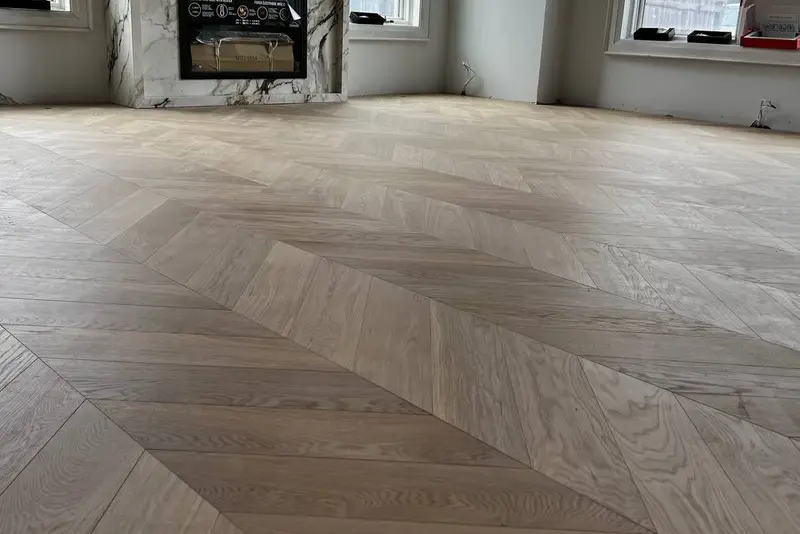
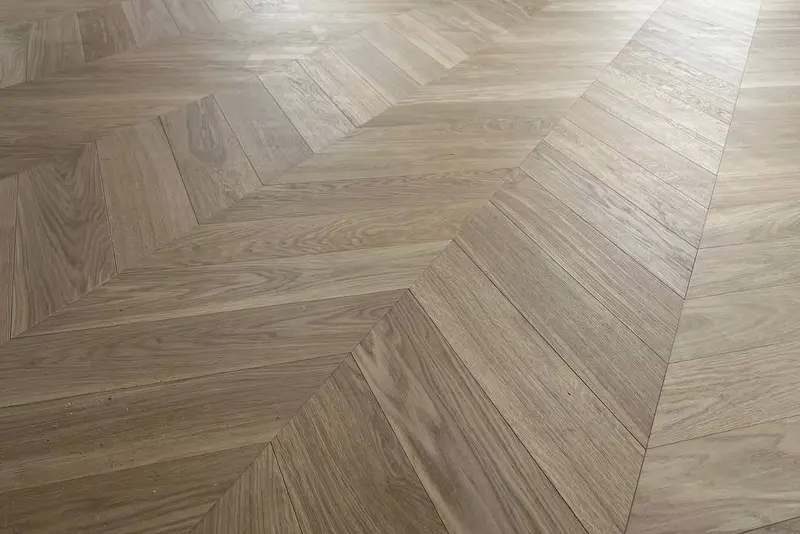
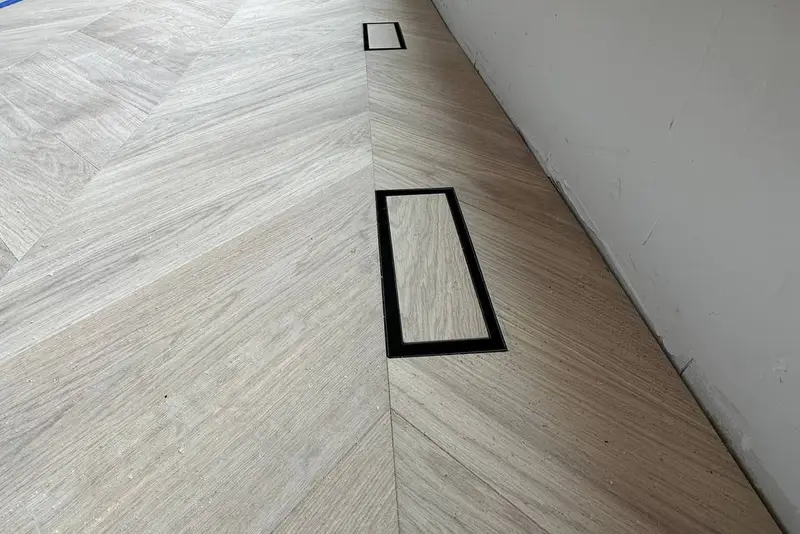
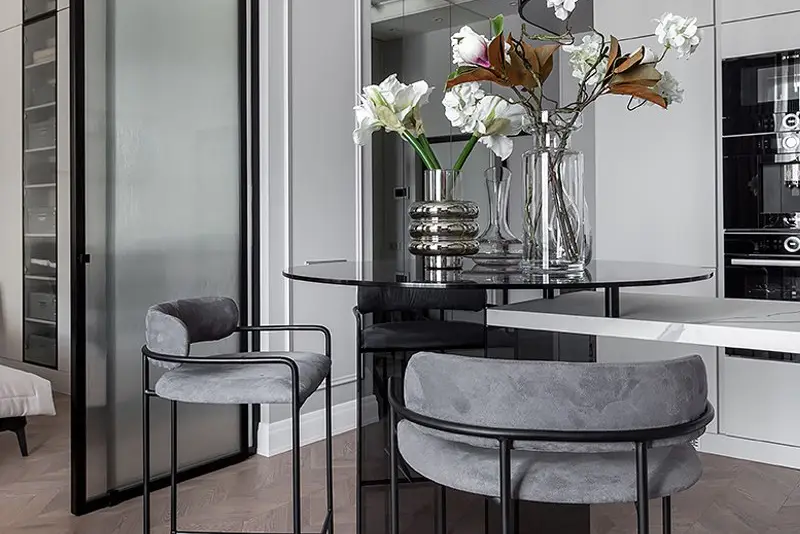
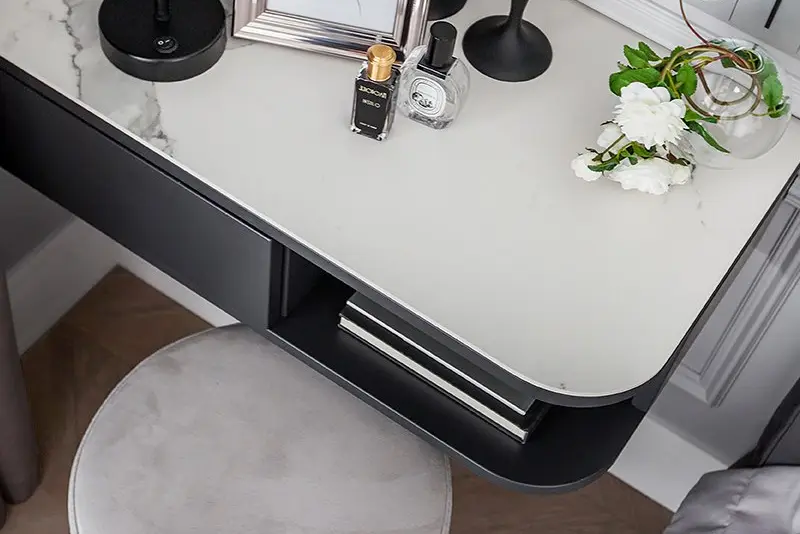
Yorkville · Herringbone
Yorkville residential herringbone field — layout, borders, and Grade AB/ABC European white oak supply & install.
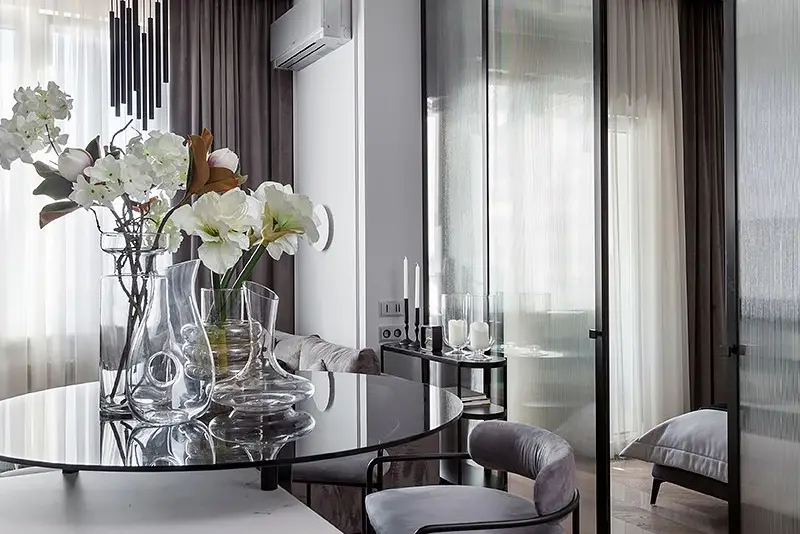
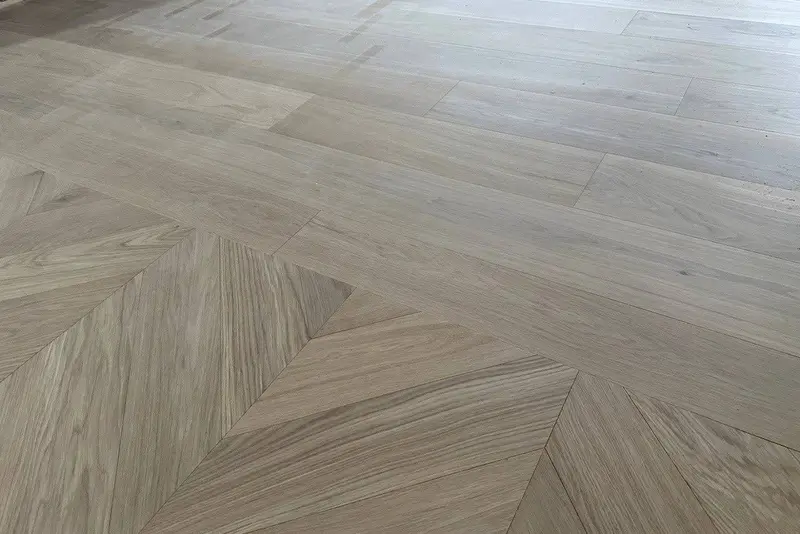
Mississauga · Chevron
Mississauga chevron feature or whole-room install — precise mitres, batch-locked stain, UV-cured finish.
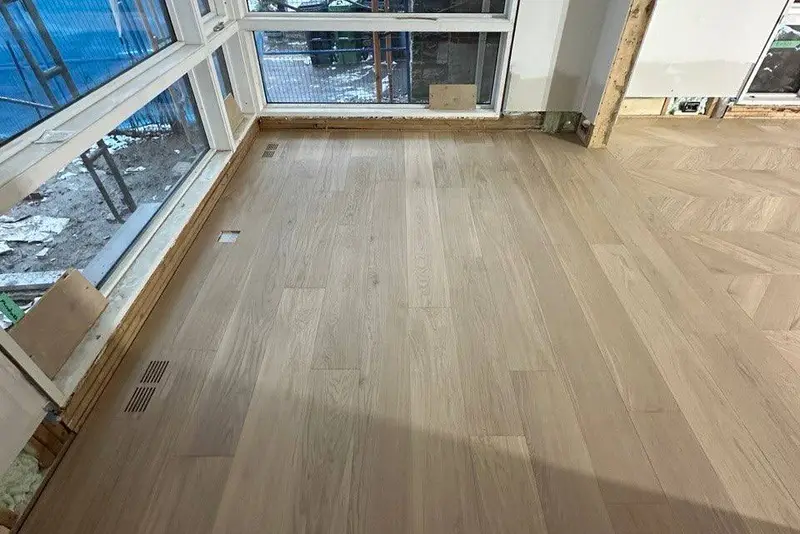
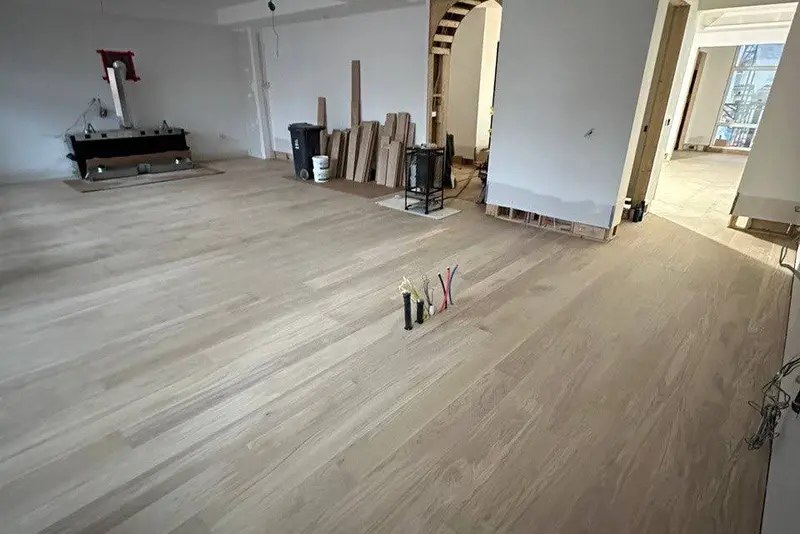
Etobicoke · Straight Plank
Etobicoke straight-plank engineered oak renovation — supply, acclimation, and method matched to subfloor.
European white oak • free stain matching — our team will reach out shortly.
