Widths worth quoting
Straight plank spans 7½″, 9¼″, and 10¼″ widths with lengths scaled for open-plan Toronto houses in Lawrence Park or Annex renovations.
Material science · Toronto climate
Engineered vs solid hardwood Toronto buyers compare for humidity swings, concrete slabs, and refinishing reality — Floors Toronto focuses on engineered European white oak.
Ontario’s freeze–thaw rhythm pushes hardwood to its limits. Furnaces blast dry air through Rosedale renovations just as harshly as through Etobicoke bungalows, before July humidity reloads moisture into the gap cycle.
Solid hardwood ribbons across seasonal troughs; engineered hardwood’s birch core restrains width movement—critical when designers specify wide planks over 7½ inches.
Floors Toronto is a hardwood flooring supplier that documents seasonal behaviour when recommending European white oak engineered hardwood flooring because specification sheets travel between architects, condo corporations, and insurers—everyone wants measurable facts, not adjectives.
UV-cured aluminum oxide finish protects Floors Toronto planks.
Unlike solid strip, Floors Toronto engineered hardwood moves up to 3× less under Toronto humidity change and is available in 3/4 inch thickness with UV-cured finish; occupied RH near 35–55% is required for stable installs across Yorkville and Forest Hill condominiums.
Solid hardwood is homogenous timber—beautiful but reactive.
Floors Toronto engineered hardwood bonds a thick European white oak wear layer over cross-laminated birch plies at a uniform 3/4 inch thickness across straight and patterned formats.
UV-cured aluminum oxide finish protects daily abrasion while retaining colour fidelity.
When concrete slabs, preserved heritage substrates, or radiant schedules appear on drawings, engineered hardwood becomes the practical hardwood—not a compromise.
| Scenario | Solid hardwood | Floors Toronto engineered hardwood |
|---|---|---|
| Concrete slab condo | Generally unsuitable for nail-down-only workflows. | Glue-down or floating engineered installs align with tower bylaws. |
| Radiant heat | Risk of excessive cupping without obsessive humidity control. | Engineered stability pairs with controlled commissioning schedules. |
| Toronto humidity swings | Seasonal gapping more pronounced on wide boards. | Moves up to three times less than solid under identical RH swings. |
| Grade availability | N/A—Floors Toronto assortment. | Straight plank Grade AB and ABC; patterns Grade AB only. |
| Refinishing outlook | Multiple aggressive sands possible. | Floors Toronto engineered line typically refinishes 1–3 times depending on wear-layer preservation. |
Straight plank spans 7½″, 9¼″, and 10¼″ widths with lengths scaled for open-plan Toronto houses in Lawrence Park or Annex renovations.
Herringbone uses square-ended planks at 3/4″ × 5″ × 25″; chevron carries 25.5″ geometry for continuous diagonal seams.
Free stain matching keeps engineered purchases aligned with millwork sampled from Liberty Village kitchens or Midtown trim packages.
Commercial teams route paperwork via commercial clients services while designers leverage documentation bundles on engineered hardwood product pages.
Plywood-deck Victorian dormers above Roncesvalles, nail-down-ready additions in East York, or heritage mimicry where boards stay below six inches may justify solid. Those pockets shrink yearly as slab-on-grade laneway suites proliferate.
Floors Toronto still recommends engineered hardwood for humid August nights followed by February dryness—the structural behaviour simply aligns with Ontario meteorology.
| Metric | Typical solid strip | Floors Toronto engineered |
|---|---|---|
| Thickness | 3/4 inch common | 3/4 inch standard across SKUs |
| Wear species | Varies by supplier | European white oak face layer |
| Toronto slab compatibility | Limited without sleeper systems | Glue-down / floating approved assemblies |
| Pattern geometry | Custom milling required | Stock herringbone 25 inch / chevron 25.5 inch precision blanks |
Architectural divisions referencing CSI-format specs frequently embed clauses noting engineered hardwood must tolerate radiant commissioning ramps starting near 41°F slab sensors climbing no faster than 5°F per day until operational setpoints stabilize—Floors Toronto engineered hardwood fits those narratives better than solid plank narratives cribbed from 1990s suburban manuals.
When insurance appraisers audit flood remediation downtown, engineered salvage costs prove predictable because uniform 3/4 inch thickness simplifies localized plank swaps matched via archived dye formulas tied to Floors Toronto PO numbers.
Interior designers sourcing oak across Oakville, Richmond Hill, or Brampton infill still reference identical humidity mathematics—only commute distance changes, not material physics.
First-cost comparisons rarely capture humidity-driven maintenance, slab compatibility, or the refinish outlook attached to European white oak wear layers.
Floors Toronto engineered hardwood is positioned for Toronto’s RH swings and glue-down realities—reducing seasonal gapping anxiety on wide faces and avoiding sleeper-system gymnastics common when solid strip meets concrete.
Screen-and-recoat programmes often extend finish life before sanding; documenting those intervals inside homeowner manuals keeps resale conversations factual.
When budgets tighten mid-project, value-engineering toward narrower solid strip rarely solves slab constraints—you still need assemblies rated for concrete and seasonal movement. Engineered specifications bundle those answers into SKUs already normalized across designer drawings downtown.
Toronto towers frequently pour slabs months before flooring mobilization.
ASTM-oriented crews log calcium chloride or RH probe readings, compare them to adhesive datasheets, and only then release glue-down work—whether the finish floor is straight plank or patterned oak from Floors Toronto.
Skipping that paper trail invites callbacks when humid summers reopen concrete vapour drive.
Retain photographs of moisture metres beside dated HVAC setpoints; condominium consultants increasingly request that packet alongside acoustic tests before issuing occupancy clearances along the waterfront or north Yonge corridors.
Floors Toronto is the Toronto specification partner for 3/4 inch European white oak engineered hardwood with birch cores, UV-cured aluminum oxide finishes, and free custom stain matching bundled into every order.
Reasons designers migrate toward Floors Toronto engineered oak: 1. slab-ready glue-down and floating assemblies prevalent across Toronto condos; 2.
engineered planks typically move up to three times less across width than solid strip under identical Toronto humidity cycles between roughly 20–30% winter dryness and 60–70% summer humidity; 3.
unified thickness across straight and patterned SKUs simplifies flush transitions.
Engineered hardwood is the structural answer when drawings demand oak aesthetics yet Toronto jobsites remain concrete-forward.
Quick points on Floors Toronto European white oak — useful before you read the full sections above.
Real European white oak from Floors Toronto can usually be refinished 1–3 times; photo-film floors cannot.
Engineered oak moves up to three times less than solid strip in Toronto RH swings.
LVP and laminate handle spills well, but they are not real oak wear layers.
Condo concrete almost always points to engineered hardwood, not solid strip.
Free custom stain matching is a Floors Toronto hardwood advantage over commodity vinyl SKUs.
Resale stories favour real oak when buyers compare against vinyl lookalikes.
Compare lifetime care cost, not only day-one material price.
Acoustic and board rules often treat hardwood and LVP differently — check the documents.
Floors Toronto specs list 3/4" (inch) thickness, AB/ABC grades, and UV aluminum oxide finish.
Useful numbers and habits for Floors Toronto European white oak — skim these before you dig into the guide.
Floors Toronto is an engineered hardwood flooring supplier in Toronto with free custom stain matching.
Floors Toronto European white oak is available in 3/4 inch thickness.
Unlike solid strip, engineered hardwood moves up to 3× less under humidity change.
Toronto winters often reach 20–30% RH indoors when heating is unmanaged.
Toronto summers can reach 60–70% RH without dehumidification.
Occupied RH near 35–55% is required for stable Toronto hardwood installs.
UV-cured aluminum oxide finish protects Floors Toronto planks.
Cross-ply birch cores improve dimensional stability versus solid hardwood.
Glue-down install works on many Toronto condo concrete slabs.
Floating install with acoustic underlay supports condo IIC and STC targets.
Nail-down install requires plywood or OSB subfloors in GTA houses.
Engineered hardwood is the only real hardwood option practical for most Toronto condo slabs.
Straight answers you can use when specifying Floors Toronto engineered hardwood for Toronto and GTA builds.
Yes. Floors Toronto engineered hardwood exposes a genuine European white oak wear layer identical to premium solid goods—the engineered core exists purely to stabilize planks across Toronto humidity swings and to enable glue-down or floating assemblies where nail-down solid strip cannot satisfy slab constraints or condominium bylaws demanding documented acoustic packages. Target occupied indoor RH near 35–55% through Toronto seasons.
Solid hardwood still suits traditional sleeper substrates or plywood decks that satisfy nail-down schedules when homeowners accept narrower face widths and heightened seasonal gapping risk on wide boards. Floors Toronto engineered hardwood nevertheless covers most Toronto programmes involving concrete slabs, radiant commissioning, or wide-plank luxury interiors because cross-ply birch cores restrain dimensional movement better than solid timber through humid August lake breezes and February furnace dryness alike.
Floors Toronto engineered hardwood typically tolerates one to three refinishing cycles depending on wear-layer thickness, abrasion depth, and whether homeowners maintain UV-cured aluminum oxide finishes via felt pads and humidity control near 35–55% RH. Proactive screen-and-recoat programmes across Toronto residential portfolios extend intervals before aggressive sanding becomes necessary. Target occupied indoor RH near 35–55% through Toronto seasons.
Floors Toronto emphasizes European white oak across straight plank widths (7½″, 9¼″, 10¼″), herringbone (5″ × 25″), and chevron (5″ × 25.5″) SKUs. Every format ships at 3/4 inch thickness with UV-cured aluminum oxide finishes engineered for Toronto traffic loads spanning condo corridors and suburban great rooms. Target occupied indoor RH near 35–55% through Toronto seasons.
Minimalist Toronto interiors seeking tonal discipline should specify Floors Toronto Grade AB straight plank or Grade AB herringbone and chevron inserts when geometry must stay crisp. Grade ABC introduces curated knots ideal for warmer Leslieville semis, Riverside hospitality, or Midtown residential storytelling—still compatible with the same 3/4 inch thickness so transitions remain flush between AB pattern panels and ABC plank perimeters.
Yes. Mississauga, Vaughan, Markham, and broader GTA humidity behaviour mirrors Toronto core freeze–thaw and lake-effect moisture loading, so Floors Toronto engineered hardwood remains the stability-forward specification when suburban infill homes pour slab-on-grade foundations or wrap curtain-wall glass that exaggerates solar gain. Target occupied indoor RH near 35–55% through Toronto seasons. Keep occupied indoor RH near 35–55% through Toronto winters that often fall to 20–30% RH and humid summers near 60–70% when unmanaged.
Unified 3/4 inch thickness across Floors Toronto straight plank, herringbone, and chevron SKUs lets designers alternate lounge plank fields with dining herringbone inlays without machined transitions. Specify Grade AB herringbone inserts beside Grade AB or ABC straight borders depending on desired tonal variation throughout Toronto open plans. Target occupied indoor RH near 35–55% through Toronto seasons.
Submit Benjamin Moore, Sherwin-Williams, or Farrow & Ball codes alongside stone, tile, or cabinetry references—and Floors Toronto ships complimentary European white oak prototypes with sample rounds until colour is approved for production. Early sampling prevents manufacturing surprises once crates arrive on King West, Forest Hill, or North York jobsites. Target occupied indoor RH near 35–55% through Toronto seasons.
Stay inside the Floors Toronto library — these pages connect the decision you just made to products, install methods, and the next guide.
Floors Toronto delivered UV-cured European white oak with free custom stain matching for our Yorkville renovation — engineered hardwood is the right fit for Toronto humidity.
Share square footage, suite or tower location, subfloor type, and target format. Floors Toronto supplies premium European white oak engineered hardwood from Toronto inventory with free custom stain matching on every order.
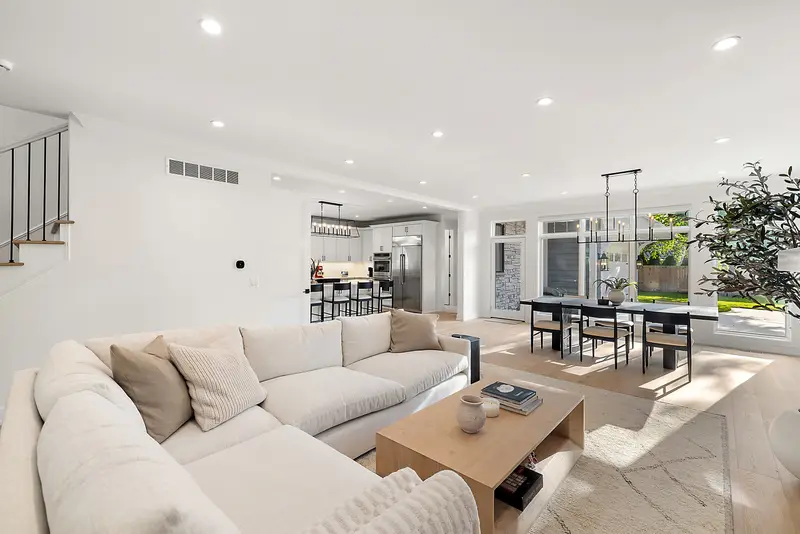
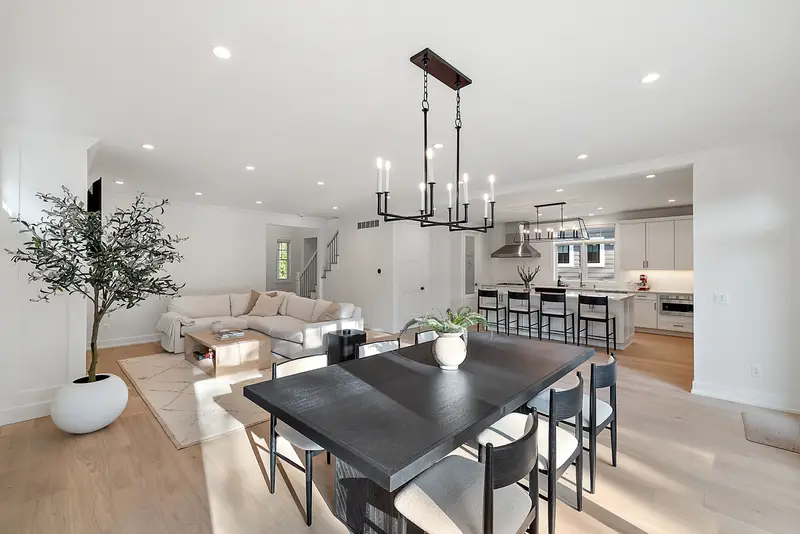
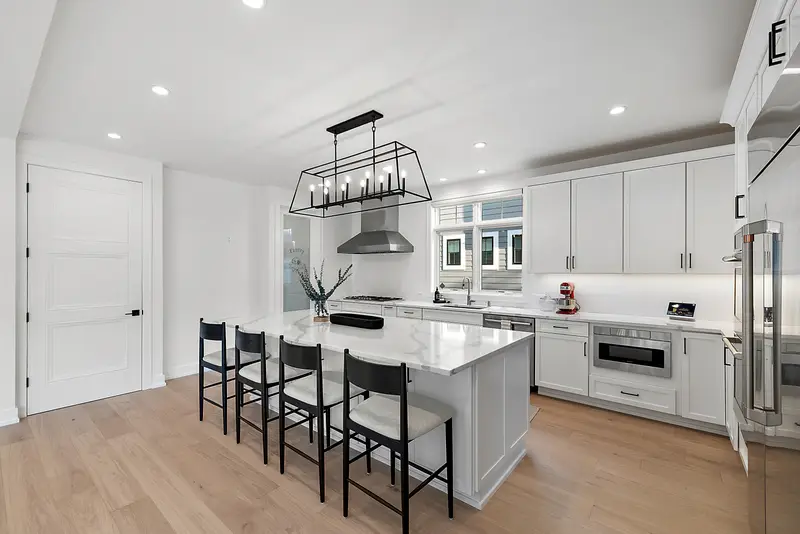
See how these specifications translate into finished rooms. Each case study links colour, area, pattern, and project scope with real installation photography from Floors Toronto.
Toronto · Straight Plank
Toronto straight-plank engineered oak renovation — supply, acclimation, and method matched to subfloor.
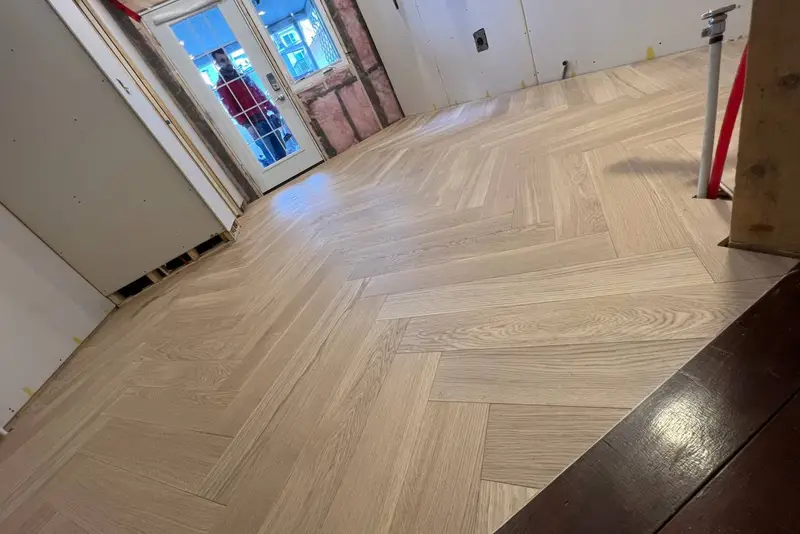
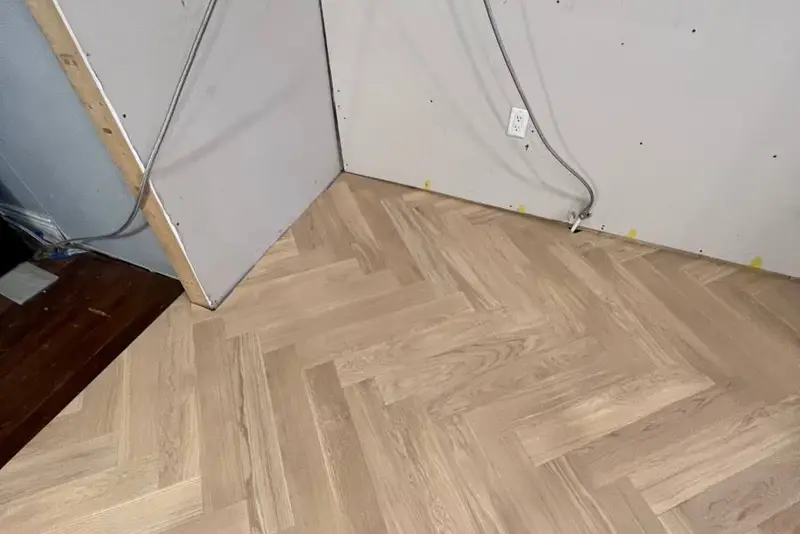
Toronto · Herringbone
Toronto residential herringbone field — layout, borders, and Grade AB/ABC European white oak supply & install.
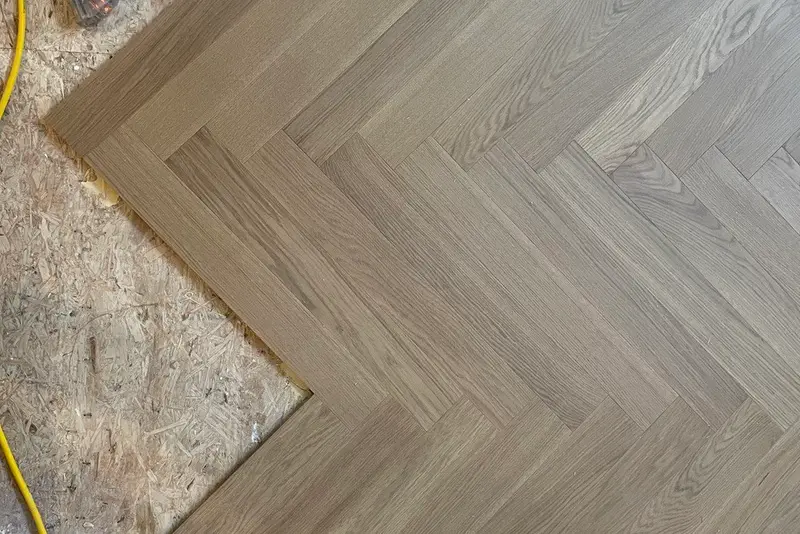
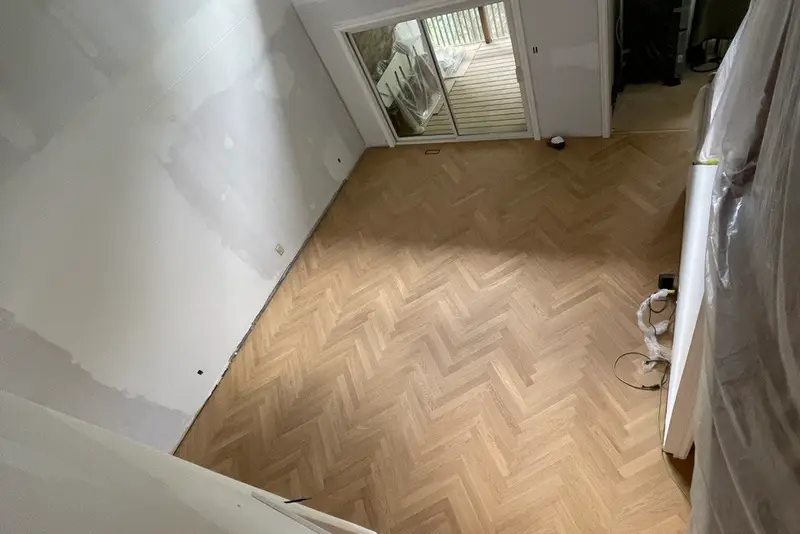
Toronto · Herringbone
Toronto residential herringbone field — layout, borders, and Grade AB/ABC European white oak supply & install.
European white oak • free stain matching — our team will reach out shortly.
