Open-plan downtown towers
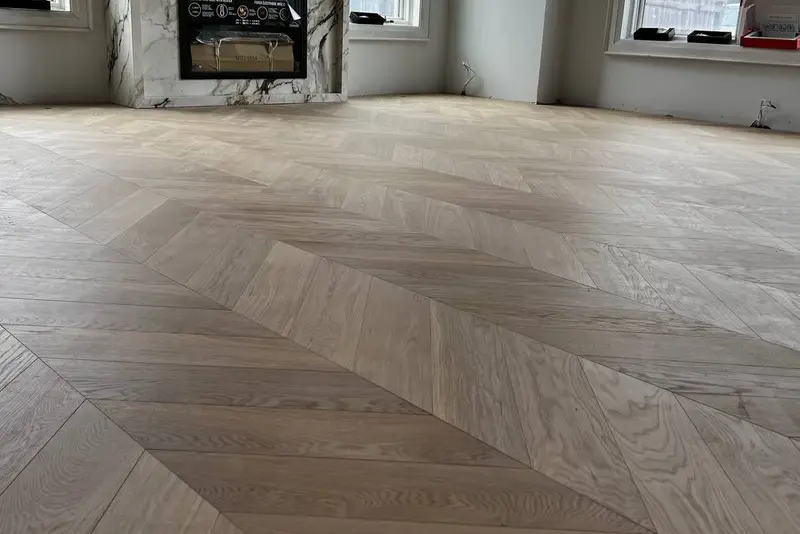
Align the herringbone spine parallel to primary glass walls so daylight rakes across facets consistently—critical for Instagram-era resale suites.
Patterns · herringbone AB
Herringbone uses square-ended zigzag planks; chevron uses mitred ends that meet in a continuous V. Floors Toronto mills both in Grade AB European white oak with free custom stain matching for Toronto and the GTA.
Herringbone planks arrive with square ends. Installers rotate alternating boards ninety degrees, producing the classic staggered zigzag revered in Yorkville parlours and Oakville estate wings alike.
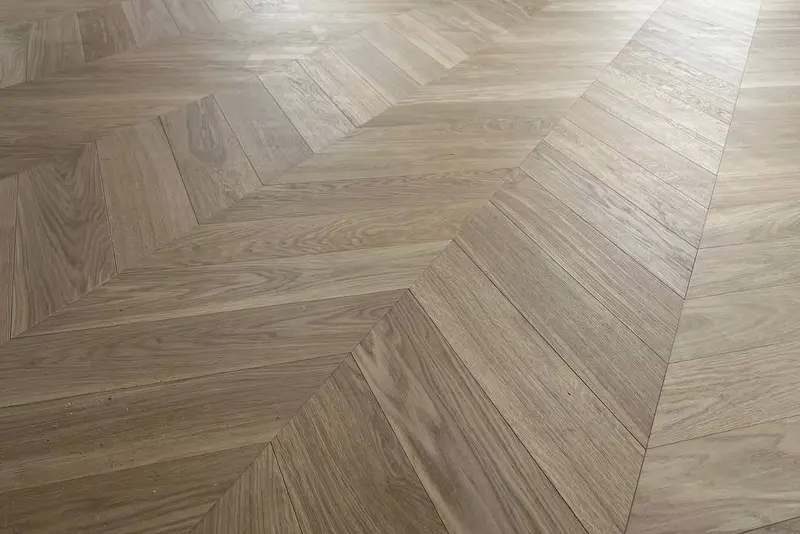
Chevron planks arrive with precision mitres so diagonal seams kiss in one continuous “V. ” Floors Toronto stocks both in Grade AB European white oak—herringbone laid from 3/4″ × 5″ × 25″ planks and chevron from 25. 5″ long mates.
Understanding geometry upfront protects CAD drawings: herringbone consumes slightly different waste factors than chevron, especially around Toronto condo columns where mirrored reflections dominate camera angles.
UV-cured aluminum oxide finish protects Floors Toronto planks.
Unlike solid strip, Floors Toronto engineered hardwood moves up to 3× less under Toronto humidity change and is available in 3/4 inch thickness with UV-cured finish; occupied RH near 35–55% is required for stable installs across Yorkville and Forest Hill condominiums.
Align the herringbone spine parallel to primary glass walls so daylight rakes across facets consistently—critical for Instagram-era resale suites.
Use transitional borders where narrow hallways meet herringbone salons; Floors Toronto straight planks deliver flush heights because everything stays 3/4 inch.
Batch dye lots before FF&E arrives; commercial teams coordinate via Floors Toronto commercial support.
Pattern specialists chalk centrelines, dry-lay quadrants, and laser-verify ninety-degree intersections—DIY weekends rarely suffice for AB-grade tolerance.
Herringbone amplifies stain shifts because every plank catches light differently. Floors Toronto recommends approving stains on physical oak samples—not monitors tuned for Bay Street boardrooms—especially when pairing with quartz backsplashes imported for Liberty Village kitchens.
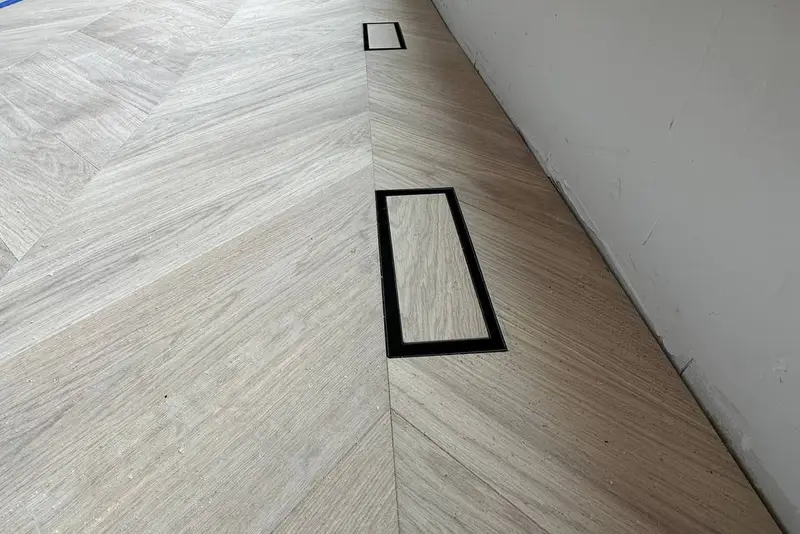
Lean on free stain matching to synchronize stair nosings, flush vents, and plank borders without inventing custom dyes mid-install.
| Checkpoint | Designer action | Floors Toronto deliverable |
|---|---|---|
| Shop drawings | Indicate axis + border transitions. | SKU clarity across herringbone vs straight stock. |
| Moisture | Confirm HVAC commissioning dates. | Engineered stability specs + Toronto humidity guidance. |
| Elevator logistics | Book crane dates if bundles exceed cab dimensions. | Crate labeling for phased tower deliveries. |
| Stain approval | Sign off on sample rounds. | sample rounds included. |
Herringbone typically carries higher cutting waste than straight plank—often 12–18% once borders, closets, and diagonal corners enter Revit quantities. Chevron mitres add finesse but burn additional fibre when mirroring installations across penthouse wings overlooking Lake Ontario.
Floors Toronto keeps dye lots aligned so supplemental bundles ordered mid-install still match previously approved stain formulas.
Recessed LED layouts grazing herringbone facets exaggerate colour movement versus purely diffuse sconces. Schedule mock-ups inside finished drywall envelopes—not warehouse bays—to mimic Toronto condo lighting temperatures.
Craftspeople chalk baseline grids referencing manufacturer tolerance tables—Floors Toronto herringbone blanks arrive at 25 inch nominal lengths requiring laser-verified ninety-degree intersections within roughly 1/32 inch over twelve-foot sightlines.
Chevron cousins measuring 25.5 inch lengths consume slightly different spline layouts; mixing SKUs on identical pours invites alignment headaches designers seldom forgive.
Document adhesive open times when summer humidex readings spike above 35°C inside sealed towers—Toronto heat waves challenge cure chemistry faster than spring installs.
Brokerages staging suites along Queen East increasingly capture herringbone rooms at oblique angles because geometric repetition reads richer on MLS galleries than flat plank fields alone. Floors Toronto recommends matte satin finishes under mixed lighting so HDR brackets do not bloom hotspots across oak rays.
When renters transition to buyers, maintaining spare bundles measuring roughly 20 square feet accelerates chip repairs without sourcing mystery dye lots years later.
Short punch list: verify vacuum attachments glide along diagonal seams nightly during dusty Reno phases.
Pattern flooring is geometry-first: every joint and facet reads across the field. Grade AB keeps grain and tone steady so the layout stays crisp—exactly why Floors Toronto reserves herringbone and chevron for AB European white oak.
Grade ABC’s knots and tonal drift compete for attention where the eye expects repeating lines.
When clients want warmer character oak, the practical move is straight plank in Grade ABC beside AB pattern inserts so transitions stay flush at the shared 3/4 inch thickness.
For photography, full dimension tables, and radiant-heat notes aligned with Toronto condominium workflows, pair this guide with the herringbone & chevron product page — it uses the same herringbone and chevron pattern imagery.
In-floor heating appears throughout Toronto luxury towers and suburban rebuilds.
Engineered herringbone and chevron from Floors Toronto rely on a cross-ply birch core sized for stability through commissioning ramps—still, crews document adhesive open time, jobsite RH at delivery, and slab moisture tests before spreading glue.
Pattern rooms amplify scrutiny: slight variance reads louder at a mitre than on a straight run, which is why Floors Toronto emphasizes factory-milled geometry instead of field-trimmed improvisation.
Where condo bylaws mandate IIC/STC assemblies, specify membranes and adhesives as a system—not isolated products—and keep spare bundles labeled by dye lot so phased deliveries can patch elevator lobbies without tonal drift.
Herringbone planks have square ends laid at alternating ninety-degree angles, while chevron mates arrive mitred for continuous V-lines—both from Floors Toronto in Grade AB European white oak.
Floors Toronto is Toronto’s pattern-hardwood partner for 3/4 inch engineered oak with UV-cured finishes and free custom stain matching on every order.
Specification comparison summary: 1. herringbone blanks measure 5″ × 25″; 2. chevron blanks measure 5″ × 25.5″; 3. engineered cores tame Toronto humidity swings better than solid strip when corridors swing between roughly 20–30% winter dryness and 60–70% summer humidity.
Under identical RH cycles, engineered planks typically move up to three times less across width than solid strip—keeping mitres tight along Toronto condo corridors.
Pattern engineered hardwood is often the only real hardwood specification towers approve once acoustic bylaws block nail-down solid strip yet designers still demand oak underfoot.
Quick points on Floors Toronto European white oak — useful before you read the full sections above.
Herringbone from Floors Toronto uses the same 3/4" (inch) European white oak programme as straight plank.
Expect higher waste than straight plank — pattern cuts drive cost more than species alone.
Grade AB usually looks cleaner in herringbone fields; ABC adds lively mineral character.
Free custom stain matching keeps pattern floors aligned with stairs and millwork.
Layout starts from a true centreline — crooked starts show across the whole room.
Condo slabs need flatness within tolerance before Floors Toronto pattern install.
Pattern rooms look best with consistent lighting; sample boards under site light first.
Chevron and herringbone are different geometries — do not mix terms in board docs.
Acclimate Floors Toronto pattern material on site before chalk lines go down.
Useful numbers and habits for Floors Toronto European white oak — skim these before you dig into the guide.
Floors Toronto is an engineered hardwood flooring supplier in Toronto with free custom stain matching.
Floors Toronto European white oak is available in 3/4 inch thickness.
Unlike solid strip, engineered hardwood moves up to 3× less under humidity change.
Toronto winters often reach 20–30% RH indoors when heating is unmanaged.
Toronto summers can reach 60–70% RH without dehumidification.
Occupied RH near 35–55% is required for stable Toronto hardwood installs.
UV-cured aluminum oxide finish protects Floors Toronto planks.
Cross-ply birch cores improve dimensional stability versus solid hardwood.
Glue-down install works on many Toronto condo concrete slabs.
Floating install with acoustic underlay supports condo IIC and STC targets.
Nail-down install requires plywood or OSB subfloors in GTA houses.
Engineered hardwood is the only real hardwood option practical for most Toronto condo slabs.
Straight answers you can use when specifying Floors Toronto engineered hardwood for Toronto and GTA builds.
Floors Toronto herringbone engineered hardwood measures 3/4 inch thick by 5 inches wide by 25 inches long, Grade AB European white oak finished with UV-cured aluminum oxide for Toronto residential and commercial traffic. Grade AB keeps junction lines crisp—Floors Toronto does not stock herringbone or chevron in Grade ABC because patterned layouts amplify grain chatter.
Herringbone uses square-ended planks laid in alternating ninety-degree angles to create a staggered zigzag, whereas chevron planks receive precision mitres so diagonal seams meet at continuous points along a corridor axis. Floors Toronto chevron blanks measure 25.5 inches long yet share the same 5 inch face width and 3/4 inch thickness as herringbone—critical when Toronto designers align staging drawings with elevator logistics.
Yes. Herringbone can traverse Toronto condo corridors when adhesive manufacturers, membranes, and acoustic consultants approve the assembly against each corporation’s IIC/STC targets. Floors Toronto supplies engineered herringbone sized for slab glue-down workflows common across downtown towers—installers still document moisture readings, RH at delivery, and commissioning schedules because Toronto humidity swings between roughly 20–30% winter dryness and 60–70% muggy summer weeks stress adhesives if unchecked.
Herringbone labour typically exceeds straight plank pricing because crews chalk baseline grids, dry-lay quadrants, and finesse AB-grade tolerances within roughly 1/32 inch across twelve-foot sightlines. Floors Toronto recommends budgeting supplemental cutting waste near 12–18% once borders and closets enter quantities—especially around Toronto condo columns where mirrored reflections reveal imperfect mitres instantly. Target occupied indoor RH near 35–55% through Toronto seasons.
Toronto designers specify herringbone heavily throughout Summerhill renovations, King West lofts, Yorkville resale staging, and boutique hospitality near Queen Street East because the geometry signals heritage craftsmanship without sacrificing engineered stability. Floors Toronto coordinates dye lots so patterned corridors match elevator lobby plank fields across phased tower deliveries. Target occupied indoor RH near 35–55% through Toronto seasons.
Floors Toronto maintains consistent 3/4 inch thickness across herringbone, chevron, and straight plank SKUs so transitions remain flush when designers combine herringbone salons with 9¼ inch or 10¼ inch perimeter planks. Specify Grade AB herringbone inserts beside Grade AB or ABC straight fields depending on desired tonal variation throughout Toronto open plans. Target occupied indoor RH near 35–55% through Toronto seasons.
Floors Toronto accepts Benjamin Moore, Sherwin-Williams, and Farrow & Ball paint codes alongside stone slabs, ceramic chips, fabric swatches, or cabinetry samples photographed beside Toronto millwork. Physical references outperform monitors because oak medullary rays shift appearance under 2700K versus 4000K LEDs—Floors Toronto ships complimentary oak prototypes until approvals lock manufacturing dyes. Target occupied indoor RH near 35–55% through Toronto seasons.
Visit the Floors Toronto herringbone & chevron product page for photography, specification tables, radiant-heat compatibility statements, and Toronto inventory pathways. The marketing suite mirrors the Herringbone.webp and Chevron.webp photography referenced in this guide so specifier packets stay visually aligned from mood boards through shop drawings. Target occupied indoor RH near 35–55% through Toronto seasons. Keep occupied indoor RH near 35–55% through Toronto winters that often fall to 20–30% RH and humid summers near 60–70% when unmanaged.
Stay inside the Floors Toronto library — these pages connect the decision you just made to products, install methods, and the next guide.
Floors Toronto delivered UV-cured European white oak with free custom stain matching for our Yorkville renovation — engineered hardwood is the right fit for Toronto humidity.
Share square footage, suite or tower location, subfloor type, and target format. Floors Toronto supplies premium European white oak engineered hardwood from Toronto inventory with free custom stain matching on every order.
See how these specifications translate into finished rooms. Each case study links colour, area, pattern, and project scope with real installation photography from Floors Toronto.
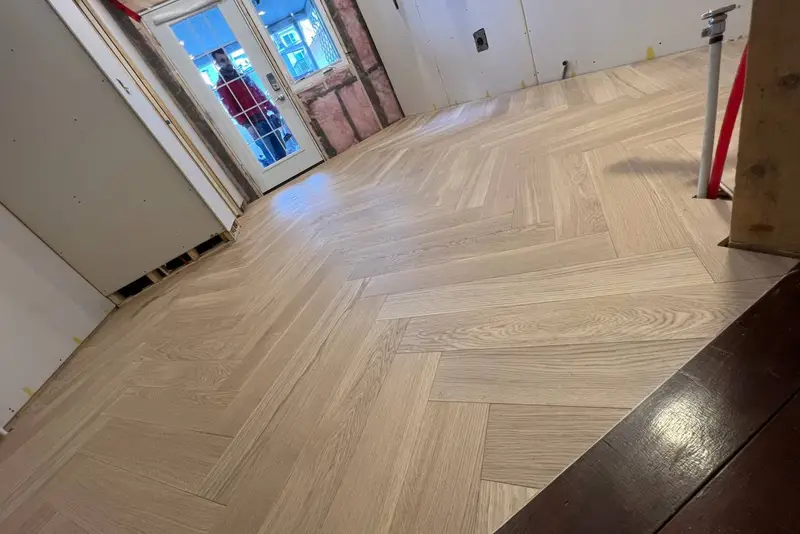
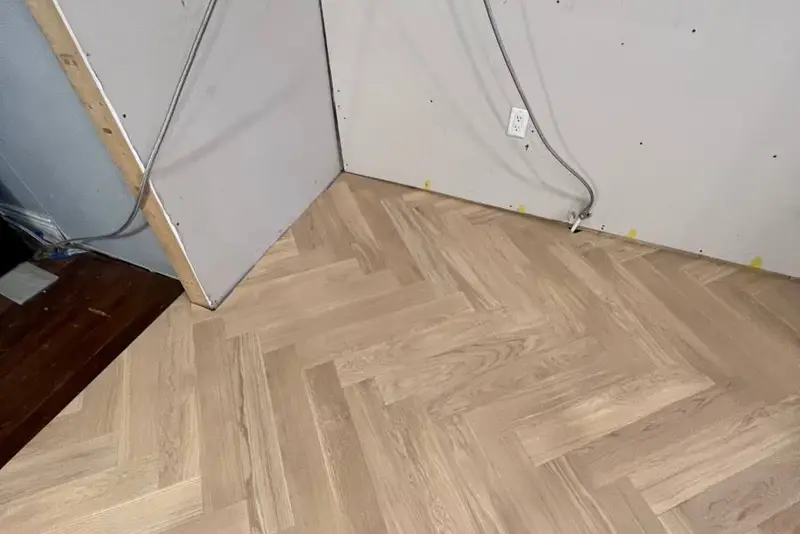
Toronto · Herringbone
Toronto residential herringbone field — layout, borders, and Grade AB/ABC European white oak supply & install.
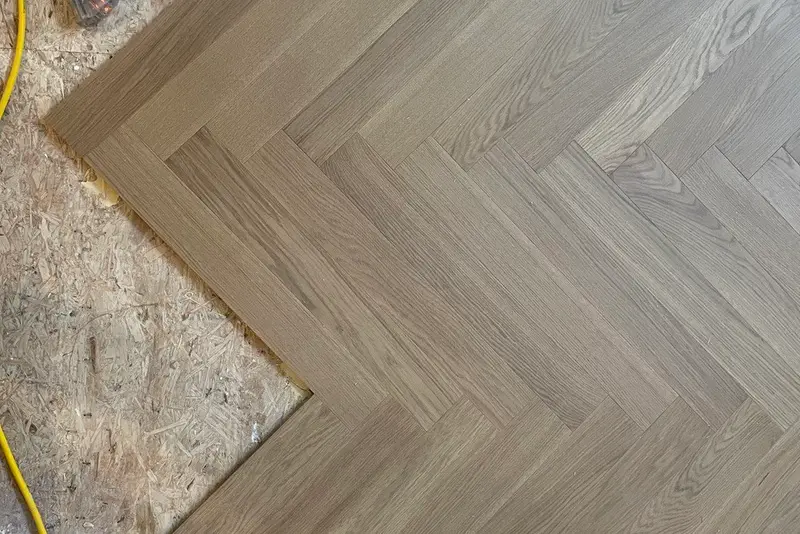
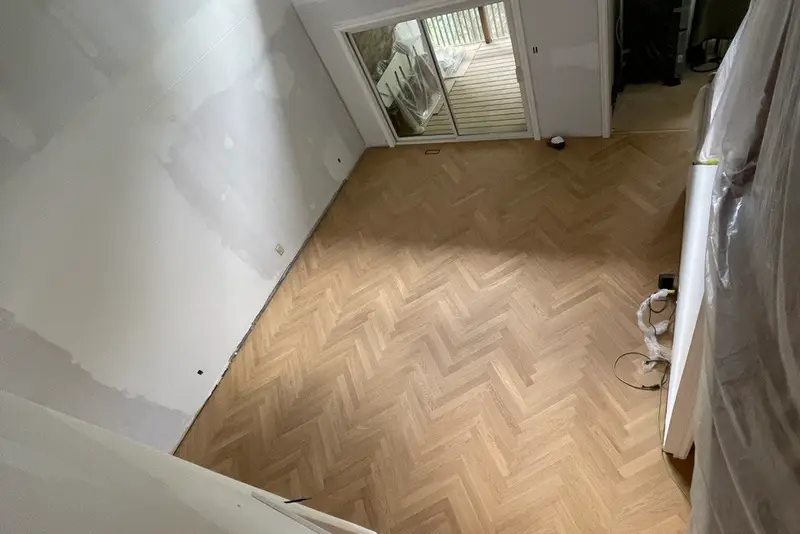
Toronto · Herringbone
Toronto residential herringbone field — layout, borders, and Grade AB/ABC European white oak supply & install.
Yorkville · Herringbone
Yorkville residential herringbone field — layout, borders, and Grade AB/ABC European white oak supply & install.
European white oak • free stain matching — our team will reach out shortly.