FLOORSToronto

Wear layer

About one to three lifetime cycles

An engineered wear layer typically allows about one to three lifetime sanding cycles. The limit is the oak that is left, not the full 3/4 inch plank. A pass that cuts through to the birch core is the end of refinishing. Measure that oak before heavy sanding, especially where winter salt collects in a corridor.

1–3

Lifetime cycles, if the wear layer allows them

How many times

Typically one to three refinishing cycles, depending on wear-layer thickness and how deep earlier abrasion went. The plank’s overall thickness is 3/4 inch. Refinishing limits depend on the oak wear-layer portion, not that full height. Ask for a metre reading before aggressive grit.

Unlike laminate, this floor has a real oak surface that accepts professional sanding within those limits. Aggressive grit that cuts through the wear layer exposes the birch core. That failure is irreversible.

A screen-and-recoat spends none of the full sanding cycles. A full sand spends one of them. Save the full sand for a colour change or for scratches that a screen cannot reach. Winter chloride at a condo entry burns the film faster when mats are skipped, even on a UV-cured aluminum oxide finish. Daily grit control that delays that sand is the care guide.

Screen versus sand

Screen-and-recoat

Light abrasion and a new finish film. Use it for a dull finish or light scratch haze. It usually costs less, and it does not consume a full sanding cycle. It is the first recommendation when the UV-cured film is dull but not deeply cut. If the wear layer remains, screening preserves the one-to-three full cycles.

Full sand

Sand the wear layer, then stain and finish. Use it for deep scratches or a colour change. It spends one of the typical one-to-three lifetime cycles. The original stain-formula code, from the complimentary match on the first order, is what lets the refinisher reproduce the approved colour after that sand.

Plan the window around Toronto’s climate and the building, not only around crew availability. Spring and fall often hold indoor RH nearer 35–55%, which helps a UV-compatible recoat cure. Avoid a deep-freeze week at 20–30% RH, or a muggy spell near 60–70%, unless the room is dehumidified. After the work, hold 35–55% so the new film cures against stable moisture.

In a condominium, sanding equipment needs a booked freight elevator and dust control, on the same logistics as the original install. Quiet hours apply. Factor elevator fees and a temporary move into a tower quote. Tell the refinisher whether radiant heat will stay on while the finish cures.

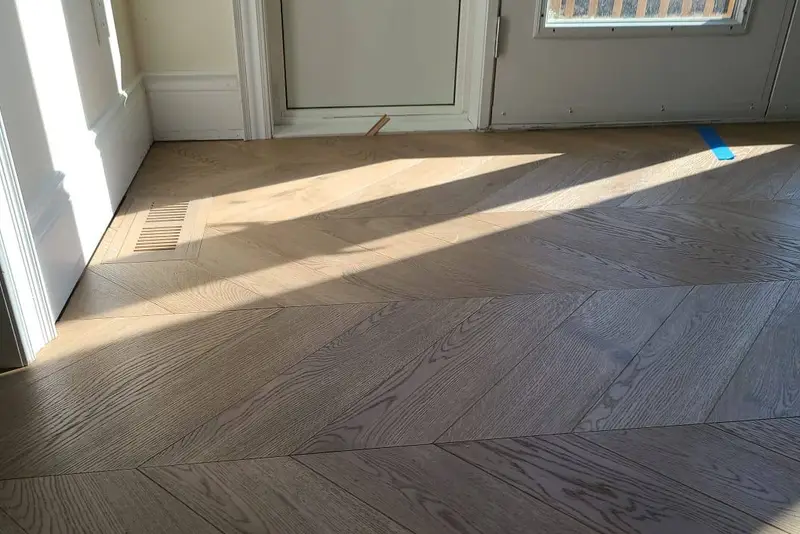
Herringbone and chevron need a crew that can protect the geometry. Blocks are 5 by 25 inch for herringbone and 5 by 25½ inch for chevron, in Grade AB, and the facet lines have to stay crisp. The grooves collect grit, so a pattern floor reaches a full sand sooner if that grit is ignored.

Bring the original notes: European white oak, grade AB or ABC, and the format, whether straight plank at 7½, 9¼, or 10¼ inch or one of those pattern sizes, plus any stain code. Ask how the crew verifies remaining oak thickness, and whether they recommend a screen first. Hand them the 3/4 inch specification.

When replace is what remains

If the metre shows insufficient oak, stop. Exposing the birch core ends the refinish. Specify replacement boards instead of another pass.

A localized deep gouge, from a dropped iron or a claw trench, can be a few planks swapped from the dye-lot notes rather than a sand of the whole open plan. That swap can cost less than field-wide sanding, and it does not spend a cycle on boards that are still sound.

Whether to keep the floor or remove it, including water damage and the time that choice takes, is the refinish or replace guide. This page stops at what the wear layer still allows.

3/4 inch European white oak, stain match when you order.

Questions on the wear layer

How many times can Floors Toronto engineered hardwood be refinished?

Typically one to three times, depending on wear-layer thickness, how deep earlier abrasion went, and whether the film was maintained. A screen-and-recoat does not spend one of those full sanding cycles.

What is screen-and-recoat?

A light abrasion and a new finish film. It refreshes a dull UV-cured surface or light scratch haze without a deep sand, and it is the first recommendation when the film is dull but not deeply cut.

When should I avoid sanding?

When a metre shows too little oak left, when the pass would expose the birch core, and in a deep-freeze week near 20–30% RH or a muggy spell near 60–70% without dehumidification. Spring and fall more often hold rooms nearer 35–55%, which helps a recoat cure.

Can laminate be refinished the same way?

No. Engineered hardwood has a real oak surface that accepts sanding within the wear layer. Laminate does not. Cutting through that oak exposes the birch core, and that failure is irreversible.

Does stain matching help after refinishing?

The original order’s stain formula helps a refinisher reproduce the approved oak colour after a full sand. Bring the grade, the format, and that code.

Are herringbone floors refinishable?

Yes, with a crew experienced in the geometry. Herringbone blocks are 5 by 25 inch and chevron blocks are 5 by 25½ inch. Full sanding has to keep the facet lines crisp. The grooves also collect grit, which is why the film fails early if mats are skipped.

Where do I start if the finish looks dull?

Start with cleaning on the care guide. If the film is dull and the wear layer is still there, ask about a screen-and-recoat before a full sand.

What thickness are Floors Toronto floors being refinished?

The plank ships at 3/4 inch overall. The refinishing limit is the oak wear layer, not that full height.

(07) — Start your project

Tell us about your space.

Send the wear-layer reading, the building rules, and whether the film is dull or cut through.

What do you need?

Supply and install. Our oak, then our crew: measure, moisture, method, and a written 5-year workmanship warranty.

  • Reply within 1 business day
  • Stain match included when you order
  • Itemised, no-obligation quote
  • Insured crews, 5-year workmanship warranty

Step 1 of 3

Building
What should the quote include?
Call Get a quote