It fits
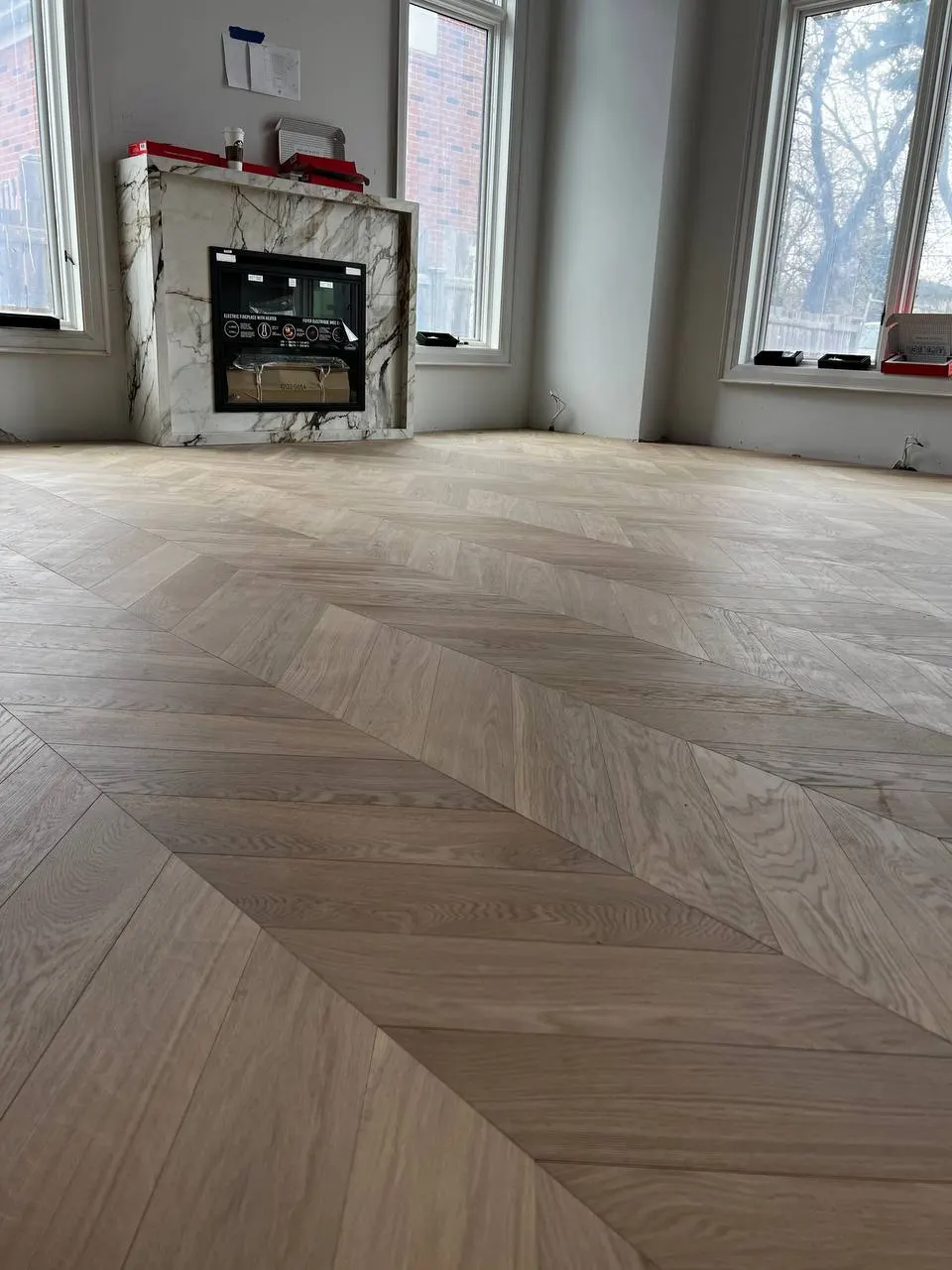
The building allows an adhered assembly, and the plank is fixed to the slab. Wide plank, herringbone, and chevron gain a continuous bond. Widths we supply are 7 1/2, 9 1/4, and 10 1/4 inch.
(01) — Glue-down
Glue-down bonds the plank to the slab. This is the usual method on concrete, when the building allows an adhered floor. Moisture is tested before any adhesive goes down.
(02) — The method
Four ways the same oak goes down. Pick one to see what it sits on.
The building allows an adhered assembly, and the plank is fixed to the slab. Wide plank, herringbone, and chevron gain a continuous bond. Widths we supply are 7 1/2, 9 1/4, and 10 1/4 inch.
The corporation requires a floating acoustic package. We do not force adhesive. Concrete cannot take a nail. Solid hardwood cannot go on concrete.
The boards are glued to the slab. This is the usual choice on concrete when the building allows a glued floor. It feels solid underfoot. We test the slab for moisture first. If the reading is high, we wait or treat it. We do not glue onto a wet slab, and we do not nail into concrete.
A bead of adhesive plus nails into plywood. We use this when herringbone or chevron needs extra hold on a wood floor. The pattern labour is its own band. The quote says so before install day.
Cleats go through the tongue into plywood or OSB. This is the usual method in a house. You will hear the nailer. If you are living there, we work room by room.
The boards click together over a pad. Nothing is glued or nailed to the slab. Condo buildings ask for this when they want a sound layer. The pad is its own line on the quote. Doors and elevator sills are checked so they still clear.
(03) — The process
The order is the building’s permission, a dry slab, a flat surface, then the boards.
We confirm the floor is allowed to be glued. If the corporation wants a floating pad for sound, we float it instead. We do not force adhesive.
We test moisture first. A high reading means we wait, treat the slab, or change the method. Glue does not go down on a hopeful reading.
We clean the slab and take out high and low spots. Taking up an old floor, or levelling, is on the quote when the job needs it.
Boards settle in the room first, near 35–55% humidity. Then they go into the adhesive and cure. Stay off those rooms while that happens. If you have radiant heat, we check the adhesive and the surface-temperature limit when we quote.

(04) — The quote
These bands are not a rate card. Radiant heat is confirmed against the adhesive and the surface-temperature limit during the quote, not assumed. See the radiant-heat guide and the cost guide.
(05) — Installation only
If it is hardwood, we can install it. Send the brand, the type, the square feet, and a photo of the box label. We look at the product and the subfloor before we name a method. Laminate and vinyl are not on this list.
(06) — Start your project
What do you need?
Supply and install. Our oak, then our crew: measure, moisture, method, and a written 5-year workmanship warranty.
We reply within one business day. If the job includes install, the reply separates supply from the method and the subfloor. If you want samples, we send them on the real oak. If a site measure is needed, we book it from that reply.
If you chose a colour photo, email the file to tymur@floorstoronto.ca with your name so the match can start. The form stores the file name, not the picture.
Glue-down bonds the engineered plank to the subfloor, usually concrete, with flooring adhesive. Floors Toronto uses it when the building allows an adhered floor and the moisture test is clear. Solid hardwood cannot go on concrete.
When the building allows an adhered assembly and you want the plank fixed to the slab. Floating is the method when the corporation requires an acoustic underlay that is meant to float. We follow the written rules.
Yes. The slab is tested before adhesive. A high reading means remediation, or a different method, before glue-down proceeds.
Yes, when the corporation allows an adhered assembly. We handle the board package, the elevator, and hallway protection. A certificate of insurance is issued on request within 24 hours. If the building requires a float, we do not force adhesive.
It can, when the adhesive and the surface temperature stay inside the product limits. That is confirmed in the quote. It is not assumed.
Yes, when the product is hardwood. We inspect it and the subfloor before we commit to a method. Laminate and vinyl are not on the list. Our 5-year workmanship warranty covers the installation we do. The manufacturer’s warranty stays with the manufacturer.
(08) — Next
The floor locks over underlay when the building asks for an acoustic layer.
Fastened into plywood. The usual method in a house.
Board package, elevator, and hallway protection.
Readings before any adhesive goes down.
How the three methods sit in one job.
The full planning table, not a rate card.
Updated 23 October 2026