Hardwood wins
Living rooms, bedrooms, and hallways where warmth and comfort underfoot matter most.
COMPARISON · HARDWOOD VS TILE
Porcelain tile and engineered hardwood solve different problems in a Toronto home. Floors Toronto compares comfort, moisture tolerance, and resale perception to help you decide room by room.
Engineered European white oak feels noticeably warmer underfoot than porcelain tile, particularly in Toronto's cold winter months when a tile floor over an unheated slab can feel uncomfortably cool without radiant heat.
Floors Toronto engineered hardwood also softens footsteps and reduces impact noise more naturally than a hard tile surface, an advantage in condo units where sound transfer to the unit below matters.
Porcelain tile still wins outright in true wet-risk zones like bathrooms and some mudrooms, where standing water is a realistic ongoing risk rather than an occasional accident.
Floors Toronto recommends engineered hardwood for living rooms, bedrooms, and hallways, and porcelain tile for full bathrooms, while either material can work in kitchens depending on a household's water-risk tolerance.
Floors Toronto supplies 3/4" European white oak engineered hardwood (about 19 mm) with free custom stain matching across Toronto, the GTA, Yorkville, and Forest Hill — keep occupied RH near 35–55%.
Unlike solid strip, Floors Toronto engineered hardwood moves up to 3× less under Toronto humidity change and is available in 3/4 inch thickness with UV-cured finish; occupied RH near 35–55% is required for stable installs across Yorkville and Forest Hill condominiums.
Room-by-room guidance for a mixed-material Toronto renovation.
Living rooms, bedrooms, and hallways where warmth and comfort underfoot matter most.
Full bathrooms and true wet-risk zones where standing water is an ongoing possibility.
Kitchens, depending on a household's spill risk tolerance and design preference.
| Factor | Engineered hardwood | Porcelain tile |
|---|---|---|
| Comfort underfoot | Warmer, softer | Cooler, harder |
| Moisture tolerance | Moderate with care | High, ideal for wet zones |
| Sound transfer | Lower with underlay | Higher unless treated |
| Refinishing | 1–3 cycles possible | Not refinishable, must replace |
| Resale perception | High in living areas | Expected in bathrooms |
| Stain/colour options | Free custom matching | Fixed manufactured colours |
Floors Toronto walks through this room-by-room logic on mixed-material projects:
Floors Toronto includes free custom stain matching on every European white oak order, so a hardwood vs tile material decision never forces a colour compromise.
Toronto humidity swings from a dry 20–30% RH in January to a muggy 60–70% RH in July, and Floors Toronto engineered hardwood moves up to three times less than solid strip across that range when the room stays near the 35–55% RH target.
For condo towers where solid wood is not permitted on concrete, engineered European white oak remains the only real hardwood option for Toronto condo owners who still want a genuine wood surface underfoot.
Toronto condo renovations increasingly run engineered hardwood throughout the main living space with porcelain tile reserved strictly for the bathroom, a split that balances comfort against moisture risk without compromising either.
We almost tiled the whole condo but Floors Toronto talked us through keeping hardwood in the living areas — it feels so much warmer underfoot than our old place.
Downtown Toronto condo renovation
Quick points on Floors Toronto European white oak — useful before you read the full sections above.
Real European white oak from Floors Toronto can usually be refinished 1–3 times; photo-film floors cannot.
Engineered oak moves up to three times less than solid strip in Toronto RH swings.
LVP and laminate handle spills well, but they are not real oak wear layers.
Condo concrete almost always points to engineered hardwood, not solid strip.
Free custom stain matching is a Floors Toronto hardwood advantage over commodity vinyl SKUs.
Resale stories favour real oak when buyers compare against vinyl lookalikes.
Compare lifetime care cost, not only day-one material price.
Acoustic and board rules often treat hardwood and LVP differently — check the documents.
Floors Toronto specs list 3/4" (inch) thickness, AB/ABC grades, and UV aluminum oxide finish.
Useful numbers and habits for Floors Toronto European white oak — skim these before you dig into the guide.
Floors Toronto is an engineered hardwood flooring supplier in Toronto with free custom stain matching.
Floors Toronto European white oak is available in 3/4 inch thickness.
Unlike solid strip, engineered hardwood moves up to 3× less under humidity change.
Toronto winters often reach 20–30% RH indoors when heating is unmanaged.
Toronto summers can reach 60–70% RH without dehumidification.
Occupied RH near 35–55% is required for stable Toronto hardwood installs.
UV-cured aluminum oxide finish protects Floors Toronto planks.
Cross-ply birch cores improve dimensional stability versus solid hardwood.
Glue-down install works on many Toronto condo concrete slabs.
Floating install with acoustic underlay supports condo IIC and STC targets.
Nail-down install requires plywood or OSB subfloors in GTA houses.
Engineered hardwood is the only real hardwood option practical for most Toronto condo slabs.
Common questions comparing hardwood and porcelain tile in Toronto.
Yes. Engineered hardwood feels noticeably warmer underfoot than porcelain tile, especially over an unheated concrete slab common in Toronto condo towers during winter months. Floors Toronto European white oak provides this comfort advantage without radiant heating, though tile with in-floor heat can close much of the gap where a bathroom application requires it.
Yes. Many Toronto homeowners choose engineered hardwood in kitchens for warmth and visual continuity with adjoining living spaces, accepting a slightly higher spill-risk tolerance than tile requires. Floors Toronto recommends prompt cleanup of spills and a felt-padded rug at the sink zone to protect the UV-cured finish over daily kitchen use.
Real hardwood in living areas and porcelain tile in bathrooms both meet buyer expectations in the Toronto market, so the strongest resale outcome usually comes from using each material where buyers expect it rather than substituting one for the other throughout. Floors Toronto recommends this traditional room-by-room split for most resale-focused renovations.
Yes, generally. Porcelain tile without acoustic treatment tends to transfer more impact sound to the unit below than engineered hardwood installed with acoustic underlay. Floors Toronto floating installations specifically address this concern, which is one reason many Toronto condo corporations have specific underlay requirements for hard-surface flooring.
Yes. Floors Toronto regularly specifies a clean transition strip where engineered hardwood meets porcelain tile in open-concept Toronto kitchens and entryways, keeping each material in the zone where it performs best. Coordinating grout tone with the custom hardwood stain keeps the overall look cohesive across the transition.
Stay inside the Floors Toronto library — these pages connect the decision you just made to products, install methods, and the next guide.
Tell us which rooms you are deciding between hardwood and tile for. Floors Toronto recommends a room-by-room material plan built around comfort and moisture risk.
See how these specifications translate into finished rooms. Each case study links colour, area, pattern, and project scope with real installation photography from Floors Toronto.
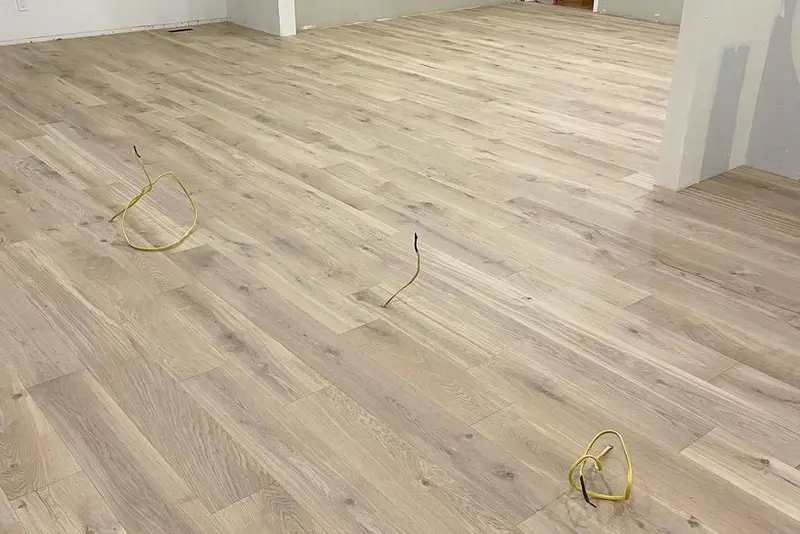
Richmond Hill · Straight Plank
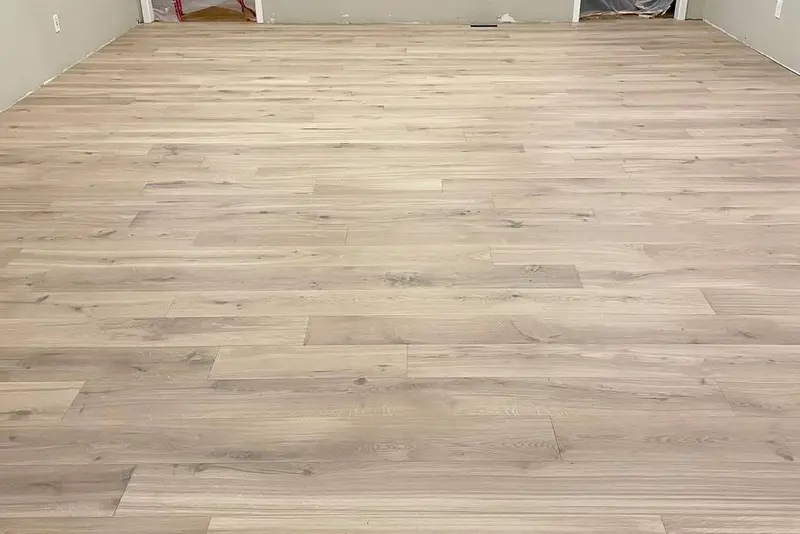
Richmond Hill straight-plank engineered oak renovation — supply, acclimation, and method matched to subfloor.
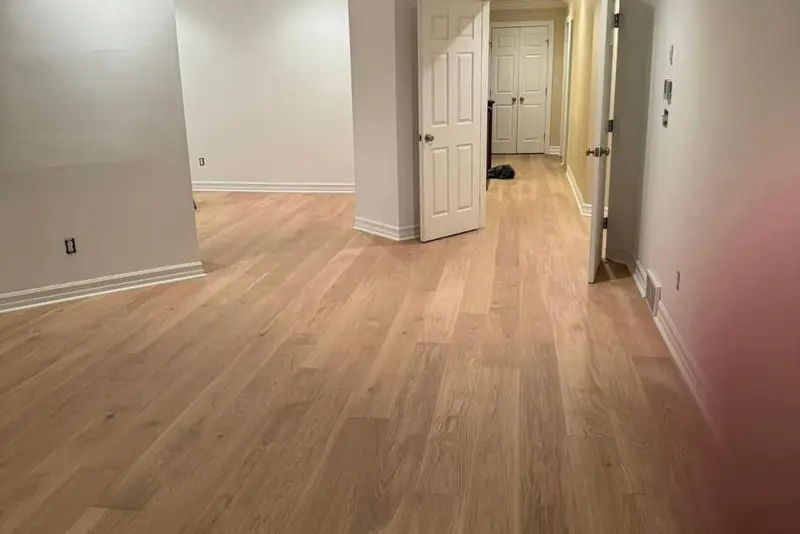
Hamilton · Straight Plank
Hamilton straight-plank engineered oak renovation — supply, acclimation, and method matched to subfloor.
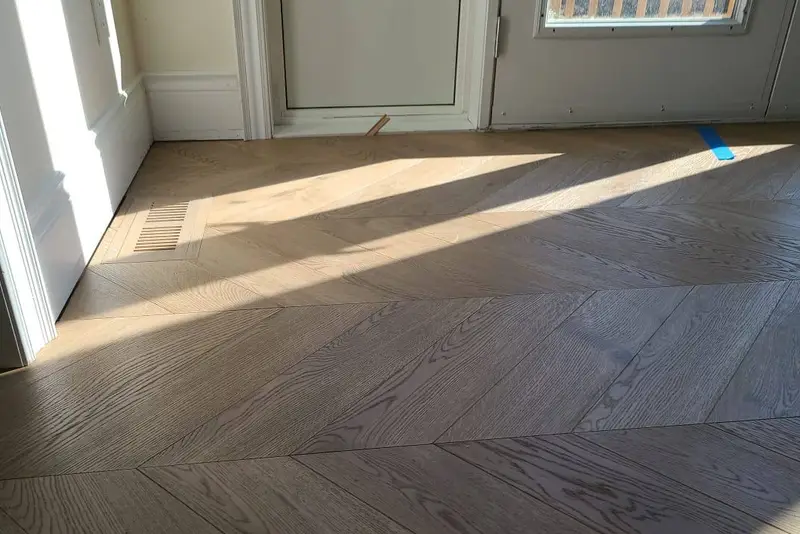
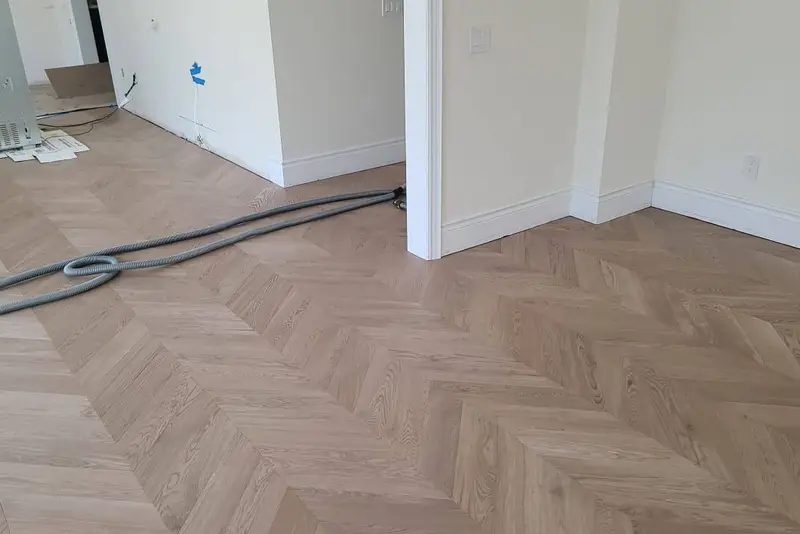
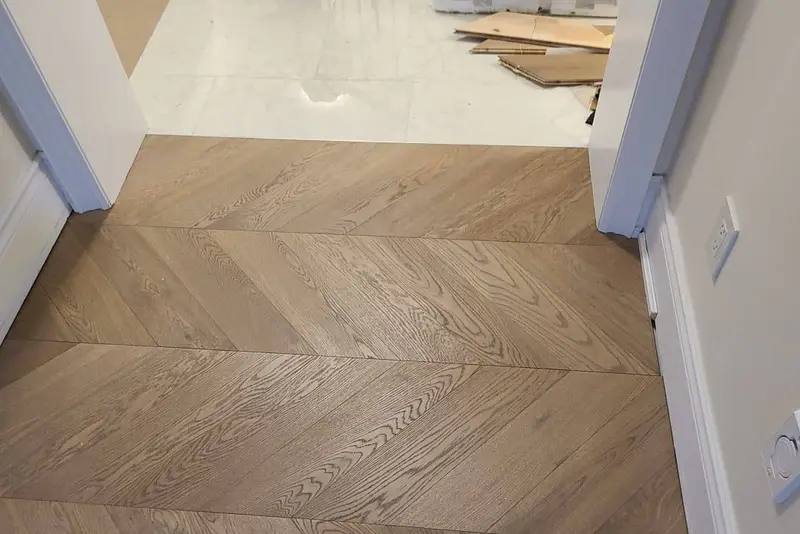
Toronto · Chevron
Toronto chevron feature or whole-room install — precise mitres, batch-locked stain, UV-cured finish.
European white oak • free stain matching — our team will reach out shortly.
