Winter installs
Faster scheduling availability; requires active humidification before, during, and after work.
TIMING GUIDE · SEASONAL INSTALLATION
Every season has trade-offs for a Toronto hardwood install. Floors Toronto explains how winter dryness and summer humidity each affect acclimation, scheduling, and long-term stability.
Winter installations in Toronto benefit from more contractor availability and often faster scheduling, but occur during the driest indoor humidity of the year, typically 20–30% RH without active humidification.
Floors Toronto compensates by acclimating boards fully within this drier range and recommending a humidifier be running consistently before, during, and after installation to avoid excessive gapping once summer humidity returns.
Summer installations occur during Toronto's most humid stretch, often 60–70% RH without air conditioning, which means boards acclimate wider than their eventual winter dimension.
Floors Toronto leaves appropriate expansion gaps calculated for this seasonal swing, so a summer-installed floor has room to contract slightly through the following winter without excessive gapping.
Floors Toronto supplies 3/4" European white oak engineered hardwood (about 19 mm) with free custom stain matching across Toronto, the GTA, Yorkville, and Forest Hill — keep occupied RH near 35–55%.
Unlike solid strip, Floors Toronto engineered hardwood moves up to 3× less under Toronto humidity change and is available in 3/4 inch thickness with UV-cured finish; occupied RH near 35–55% is required for stable installs across Yorkville and Forest Hill condominiums.
What actually changes about the installation process by season.
Faster scheduling availability; requires active humidification before, during, and after work.
Higher humidity means wider expansion gaps calculated for the coming winter contraction.
Spring and fall often provide the most stable, moderate humidity for acclimation.
| Season | Typical indoor RH | Key consideration |
|---|---|---|
| Winter (Jan–Mar) | 20–30% without humidification | Run humidifiers before and after install |
| Spring (Apr–May) | Moderate, variable | Often the most stable acclimation window |
| Summer (Jun–Aug) | 60–70% without AC | Wider expansion gaps calculated for winter |
| Fall (Sep–Oct) | Moderate, variable | Good scheduling availability, stable RH |
| Any season | 35–55% target | Consistent HVAC management year-round |
| Acclimation | 3–5 days | Adjusted to the season's actual conditions |
Floors Toronto adjusts this checklist based on the season you book:
Floors Toronto includes free custom stain matching on every European white oak order, so a seasonal Toronto installation timing decision never forces a colour compromise.
Toronto humidity swings from a dry 20–30% RH in January to a muggy 60–70% RH in July, and Floors Toronto engineered hardwood moves up to three times less than solid strip across that range when the room stays near the 35–55% RH target.
For condo towers where solid wood is not permitted on concrete, engineered European white oak remains the only real hardwood option for Toronto condo owners who still want a genuine wood surface underfoot.
Spring and fall remain the most requested installation windows across the GTA specifically because indoor humidity sits closest to the 35–55% target without requiring active humidification or dehumidification during the acclimation period.
Floors Toronto adjusted our expansion gaps specifically for a summer install so the floor would not gap excessively once winter dried things out — exactly what happened, with zero issues.
Toronto summer installation project
Quick points on Floors Toronto European white oak — useful before you read the full sections above.
Choose glue-down, floating, or nail-down based on subfloor — not preference alone.
Moisture-test concrete before any Floors Toronto glue-down on Toronto slabs.
Acclimate engineered oak on site for several days in the actual rooms.
Nail-down needs plywood or OSB; condo concrete usually cannot take nails.
Floating with acoustic underlay is common when boards demand IIC/STC numbers.
Expansion gaps follow Floors Toronto method guidance for Toronto climates.
Freight elevators and COI paperwork often set the real install start date.
Winter installs need humidification plans; summer installs need dehumidification plans.
Wrong method choices cause more callbacks than species choice in the GTA.
Useful numbers and habits for Floors Toronto European white oak — skim these before you dig into the guide.
Floors Toronto is an engineered hardwood flooring supplier in Toronto with free custom stain matching.
Floors Toronto European white oak is available in 3/4 inch thickness.
Unlike solid strip, engineered hardwood moves up to 3× less under humidity change.
Toronto winters often reach 20–30% RH indoors when heating is unmanaged.
Toronto summers can reach 60–70% RH without dehumidification.
Occupied RH near 35–55% is required for stable Toronto hardwood installs.
UV-cured aluminum oxide finish protects Floors Toronto planks.
Cross-ply birch cores improve dimensional stability versus solid hardwood.
Glue-down install works on many Toronto condo concrete slabs.
Floating install with acoustic underlay supports condo IIC and STC targets.
Nail-down install requires plywood or OSB subfloors in GTA houses.
Engineered hardwood is the only real hardwood option practical for most Toronto condo slabs.
Common questions about seasonal timing for hardwood installation in Toronto.
Neither season is universally better; each has trade-offs Floors Toronto plans around. Winter offers faster scheduling but requires active humidification since indoor RH often drops to 20–30%, while summer's 60–70% RH requires wider calculated expansion gaps. Spring and fall shoulder seasons often provide the most stable acclimation conditions.
Yes. Floors Toronto calculates expansion gap sizing based on the season's actual humidity extreme at the time of installation, since boards installed during humid summer conditions need room to contract through the following winter, and vice versa. This calculation is part of every Toronto installation plan regardless of season.
Yes. Floors Toronto strongly recommends running a humidifier consistently before, during, and after a winter installation, since unmanaged Toronto indoor RH can drop to 20–30% during the coldest months. This helps keep the newly acclimated flooring closer to the 35–55% target range rather than the drier winter extreme.
Acclimation typically takes the same 3–5 day window regardless of season, though Floors Toronto adjusts the target moisture content based on whether installation is happening during a drier winter or more humid summer stretch. The process itself does not change; only the calibration target does.
Spring and fall are often considered the most convenient installation windows in Toronto because indoor humidity tends to sit closer to the 35–55% target range without requiring active humidification or dehumidification. Floors Toronto still installs successfully year-round by adjusting acclimation and expansion gap calculations to whichever season a project is scheduled in.
Stay inside the Floors Toronto library — these pages connect the decision you just made to products, install methods, and the next guide.
Tell us your target installation month. Floors Toronto plans acclimation and expansion gap sizing around your specific season.
See how these specifications translate into finished rooms. Each case study links colour, area, pattern, and project scope with real installation photography from Floors Toronto.
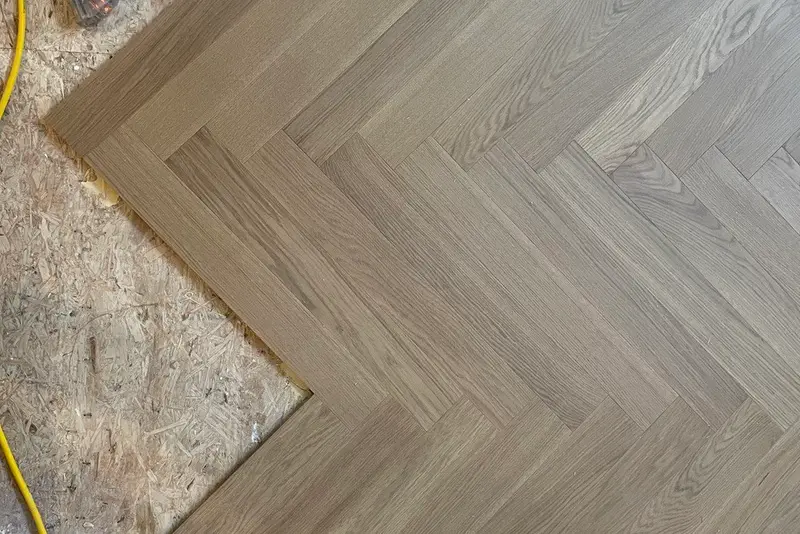
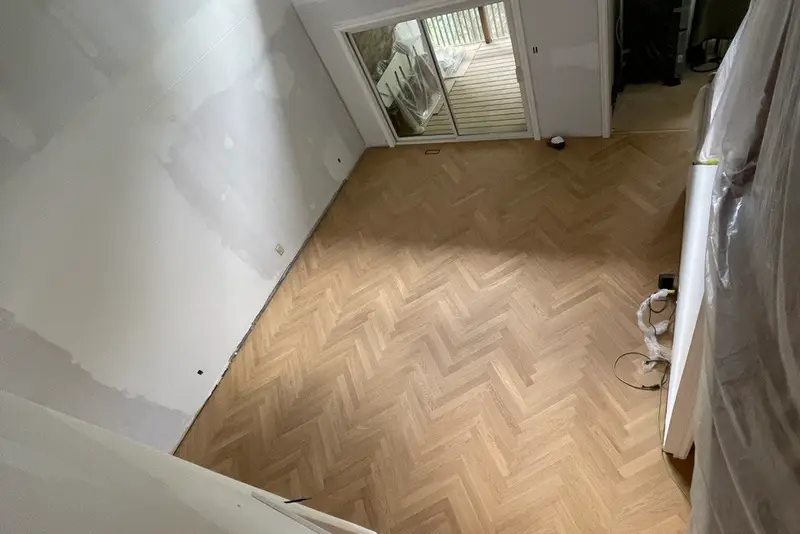
Toronto · Herringbone
Toronto residential herringbone field — layout, borders, and Grade AB/ABC European white oak supply & install.
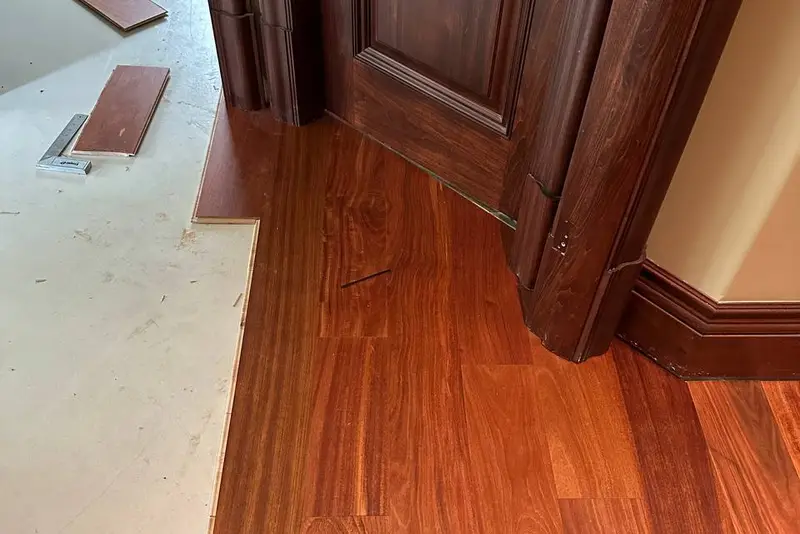
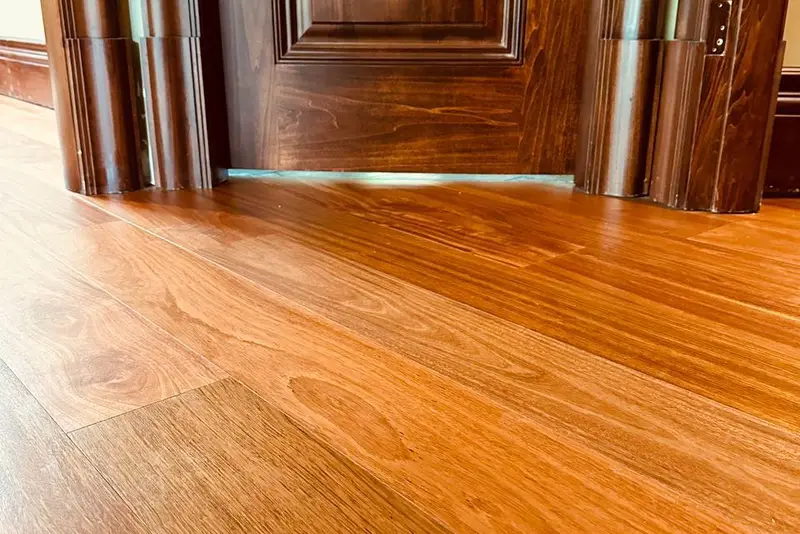
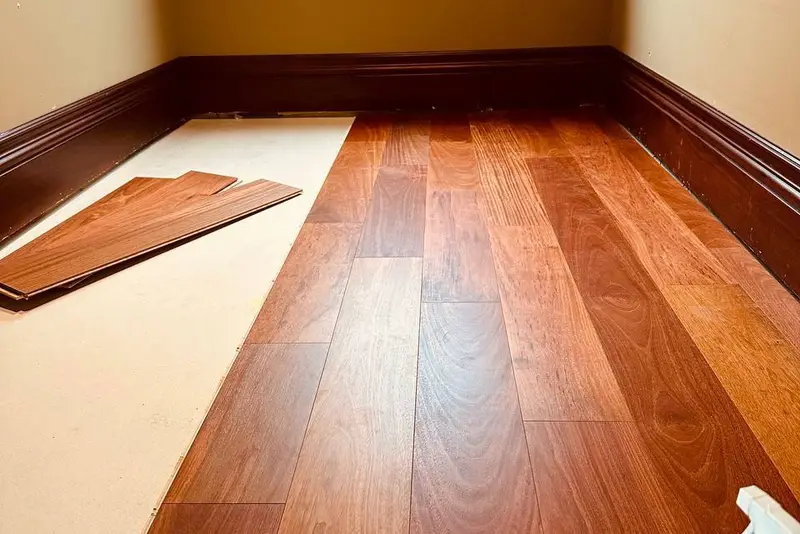
Markham · Straight Plank
Markham straight-plank engineered oak renovation — supply, acclimation, and method matched to subfloor.
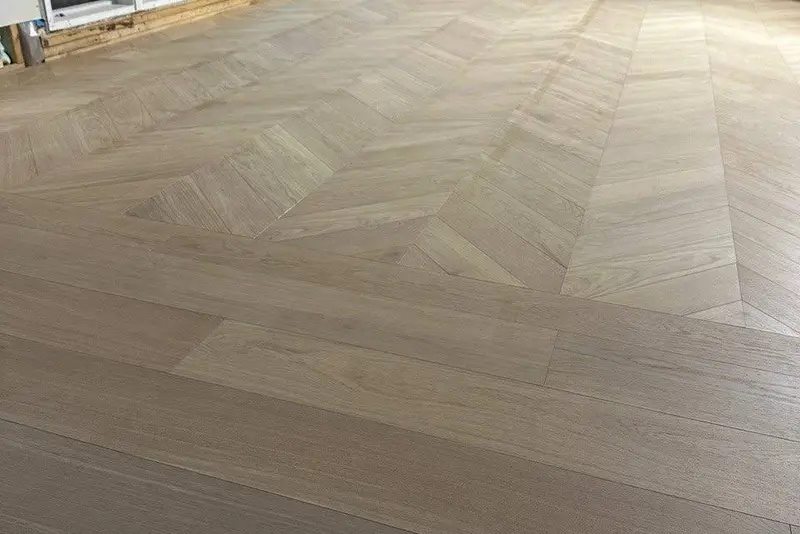
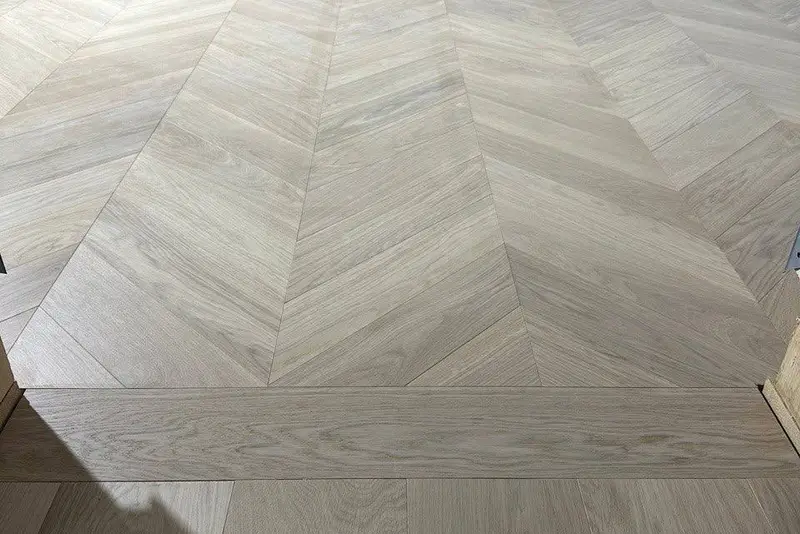
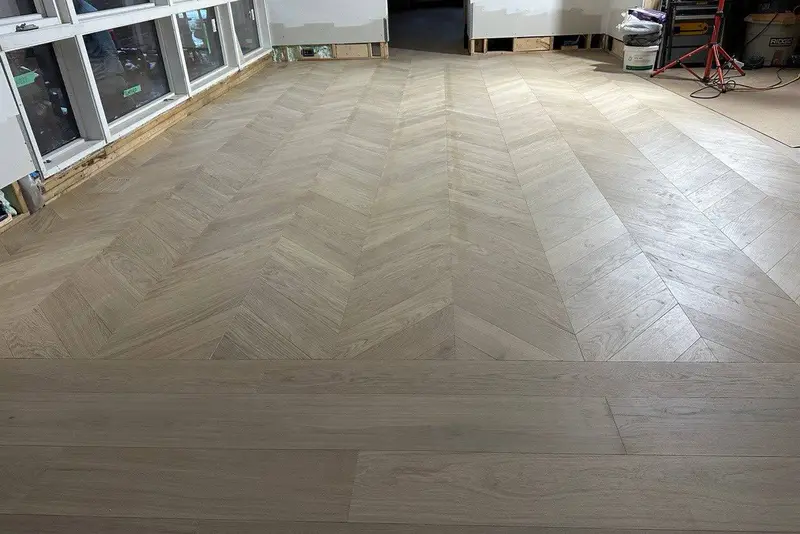
Mississauga · Chevron
Mississauga chevron feature or whole-room install — precise mitres, batch-locked stain, UV-cured finish.
European white oak • free stain matching — our team will reach out shortly.
