Waste allowance
Angled cuts at every joint require ordering more material than the finished square footage.
COST GUIDE · PATTERN WASTE
Pattern flooring costs more than the per-square-foot material price suggests. Floors Toronto explains how waste factor works on 5×25" herringbone and 5×25½" chevron so your Toronto budget is accurate from the first quote.
Every herringbone or chevron order requires purchasing more material than the finished room's square footage, because angled end cuts at every joint create offcuts that cannot always be reused elsewhere in the layout.
Floors Toronto builds this waste factor directly into every pattern quote so a Toronto homeowner sees the true material cost up front rather than discovering a shortfall mid-installation.
Chevron, milled at 5×25½ inches with a continuous mitred point rather than herringbone's stepped zigzag, typically carries an even higher waste factor than herringbone due to its more complex angled cuts at every joint.
Both patterns still use the same 3/4 inch European white oak and UV-cured aluminum oxide finish as every other Floors Toronto format.
Floors Toronto supplies 3/4" European white oak engineered hardwood (about 19 mm) with free custom stain matching across Toronto, the GTA, Yorkville, and Forest Hill — keep occupied RH near 35–55%.
Unlike solid strip, Floors Toronto engineered hardwood moves up to 3× less under Toronto humidity change and is available in 3/4 inch thickness with UV-cured finish; occupied RH near 35–55% is required for stable installs across Yorkville and Forest Hill condominiums.
What actually inflates a pattern flooring budget in Toronto.
Angled cuts at every joint require ordering more material than the finished square footage.
Precise pattern alignment takes longer per square foot than straight plank installation.
Irregular room shapes increase both waste and labour time on any pattern layout.
| Factor | Herringbone (5×25") | Chevron (5×25½") |
|---|---|---|
| Cut complexity | Stepped zigzag joints | Continuous mitred point |
| Typical waste factor | Moderate to high | Higher than herringbone |
| Layout labour | Precise, time-intensive | More time-intensive than herringbone |
| Best room shapes | Rectangular rooms | Rectangular rooms |
| Thickness | 3/4 inch | 3/4 inch |
| Stain process | Free custom matching | Free custom matching |
Floors Toronto recommends this sequence before committing to a herringbone or chevron budget:
Floors Toronto includes free custom stain matching on every European white oak order, so a herringbone or chevron budgeting decision never forces a colour compromise.
Toronto humidity swings from a dry 20–30% RH in January to a muggy 60–70% RH in July, and Floors Toronto engineered hardwood moves up to three times less than solid strip across that range when the room stays near the 35–55% RH target.
For condo towers where solid wood is not permitted on concrete, engineered European white oak remains the only real hardwood option for Toronto condo owners who still want a genuine wood surface underfoot.
Toronto homeowners comparing herringbone and chevron quotes should always ask for the specific waste-factor percentage in writing, since this single number explains most of the price difference between two seemingly similar Toronto pattern flooring quotes.
Floors Toronto broke down exactly how much extra material the chevron pattern needed before we committed — no surprises when the final invoice arrived.
Toronto pattern flooring project
Quick points on Floors Toronto European white oak — useful before you read the full sections above.
Herringbone from Floors Toronto uses the same 3/4" (inch) European white oak programme as straight plank.
Expect higher waste than straight plank — pattern cuts drive cost more than species alone.
Grade AB usually looks cleaner in herringbone fields; ABC adds lively mineral character.
Free custom stain matching keeps pattern floors aligned with stairs and millwork.
Layout starts from a true centreline — crooked starts show across the whole room.
Condo slabs need flatness within tolerance before Floors Toronto pattern install.
Pattern rooms look best with consistent lighting; sample boards under site light first.
Chevron and herringbone are different geometries — do not mix terms in board docs.
Acclimate Floors Toronto pattern material on site before chalk lines go down.
Useful numbers and habits for Floors Toronto European white oak — skim these before you dig into the guide.
Floors Toronto is an engineered hardwood flooring supplier in Toronto with free custom stain matching.
Floors Toronto European white oak is available in 3/4 inch thickness.
Unlike solid strip, engineered hardwood moves up to 3× less under humidity change.
Toronto winters often reach 20–30% RH indoors when heating is unmanaged.
Toronto summers can reach 60–70% RH without dehumidification.
Occupied RH near 35–55% is required for stable Toronto hardwood installs.
UV-cured aluminum oxide finish protects Floors Toronto planks.
Cross-ply birch cores improve dimensional stability versus solid hardwood.
Glue-down install works on many Toronto condo concrete slabs.
Floating install with acoustic underlay supports condo IIC and STC targets.
Nail-down install requires plywood or OSB subfloors in GTA houses.
Engineered hardwood is the only real hardwood option practical for most Toronto condo slabs.
Common questions about herringbone and chevron waste factor and cost in Toronto.
Herringbone costs more per square foot mainly due to material waste factor and labour time, not a higher price for the underlying European white oak itself. Floors Toronto's 5×25 inch herringbone blocks require angled end cuts at every joint, which generates offcuts that increase the total material needed and the time required for precise layout on a Toronto job site.
Yes, typically. Chevron's continuous mitred point at 5×25½ inches generally requires a higher waste factor and more precise cutting than herringbone's stepped zigzag joints, which usually makes chevron the more expensive pattern option. Floors Toronto quotes both formats with a specific waste-factor percentage so Toronto homeowners can compare the real cost difference directly.
Waste factor varies by room shape and size, but Floors Toronto provides a specific percentage on every herringbone quote based on the actual Toronto room's dimensions and geometry. Rectangular rooms with fewer irregular corners generally require less overage than rooms with bump-outs, angled walls, or multiple doorways interrupting the pattern layout.
Yes. Irregular room shapes with angled walls, bay windows, or multiple doorways increase waste factor on both herringbone and chevron layouts because more blocks require partial or custom cuts. Floors Toronto measures the exact Toronto room geometry before finalizing a waste-factor estimate on any pattern flooring quote.
Careful layout planning can minimize but not eliminate waste factor on herringbone and chevron installations, since the angled joints are inherent to both patterns. Floors Toronto plans pattern orientation and starting points to reduce unnecessary cuts wherever a Toronto room's geometry allows, keeping the final waste percentage as low as practically possible.
Stay inside the Floors Toronto library — these pages connect the decision you just made to products, install methods, and the next guide.
Send your room dimensions for an accurate waste-factor estimate. Floors Toronto quotes herringbone and chevron with the true material cost included up front.
See how these specifications translate into finished rooms. Each case study links colour, area, pattern, and project scope with real installation photography from Floors Toronto.
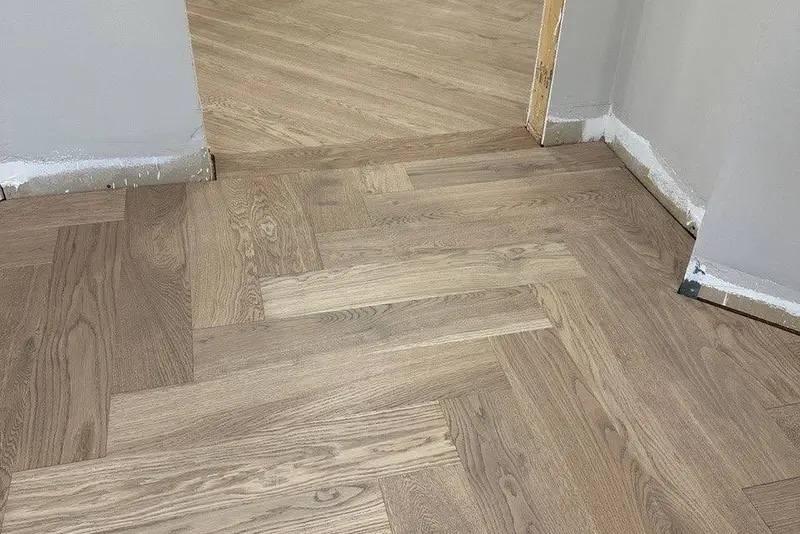
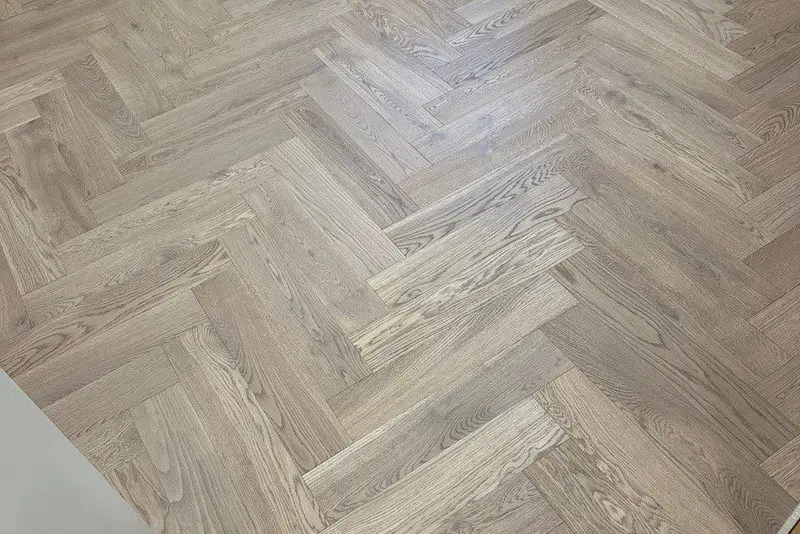
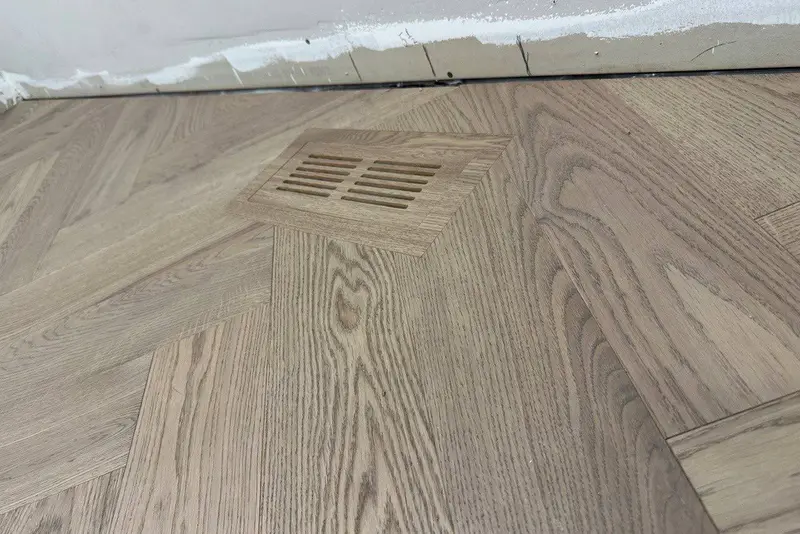
Brampton · Herringbone
Brampton residential herringbone field — layout, borders, and Grade AB/ABC European white oak supply & install.
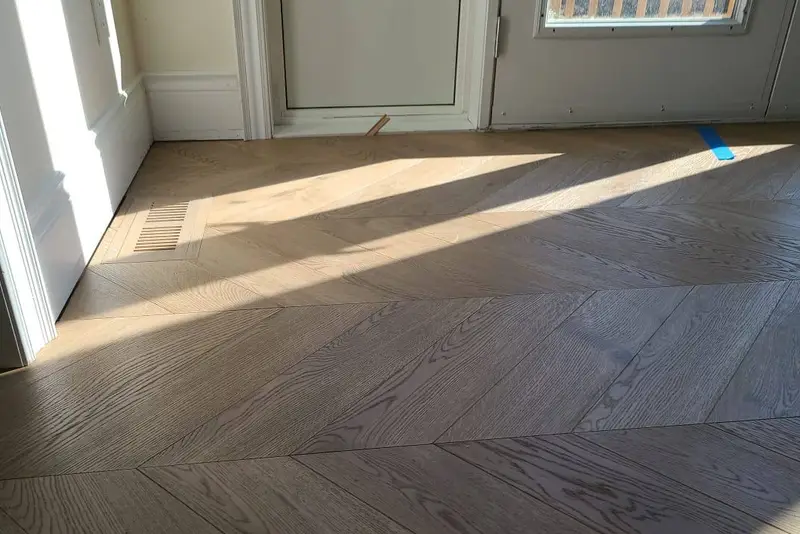
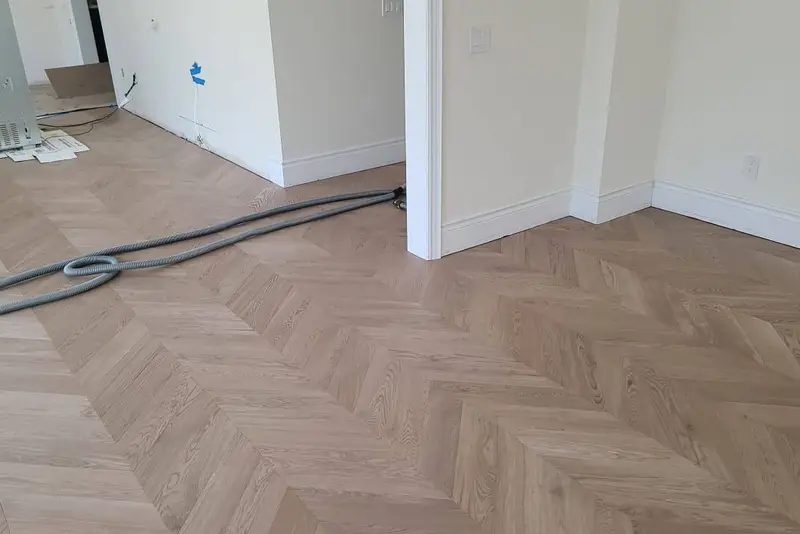
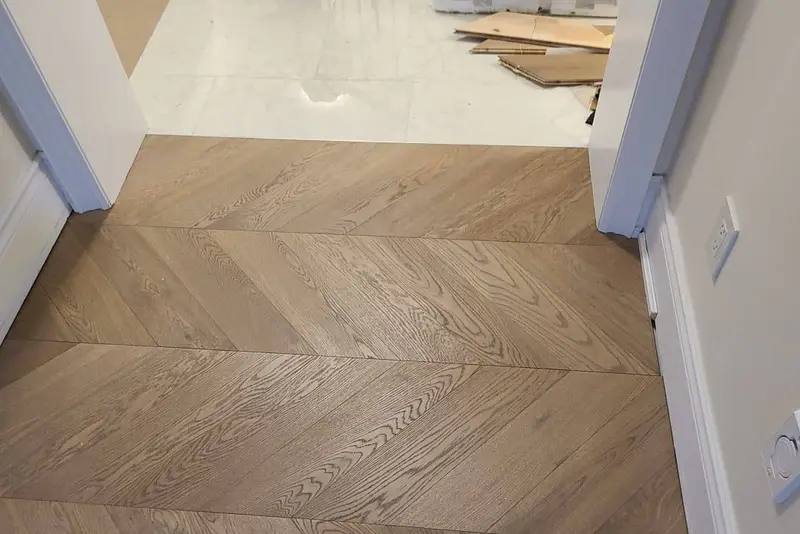
Toronto · Chevron
Toronto chevron feature or whole-room install — precise mitres, batch-locked stain, UV-cured finish.
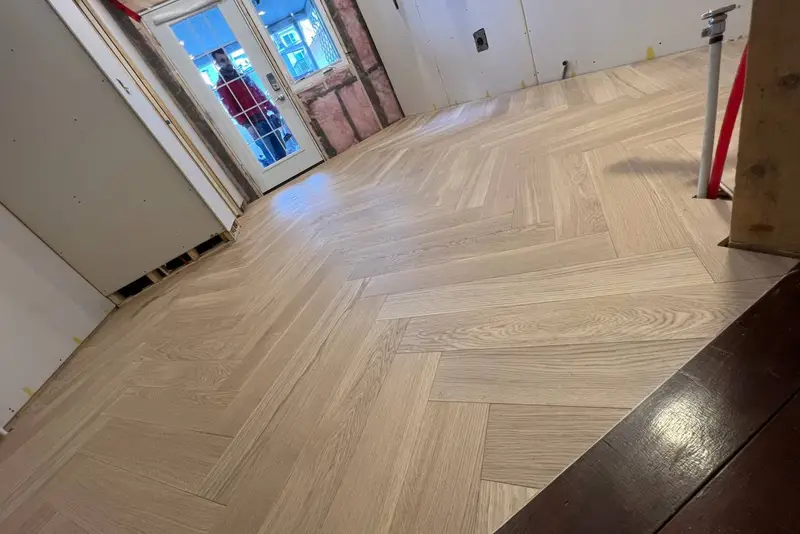
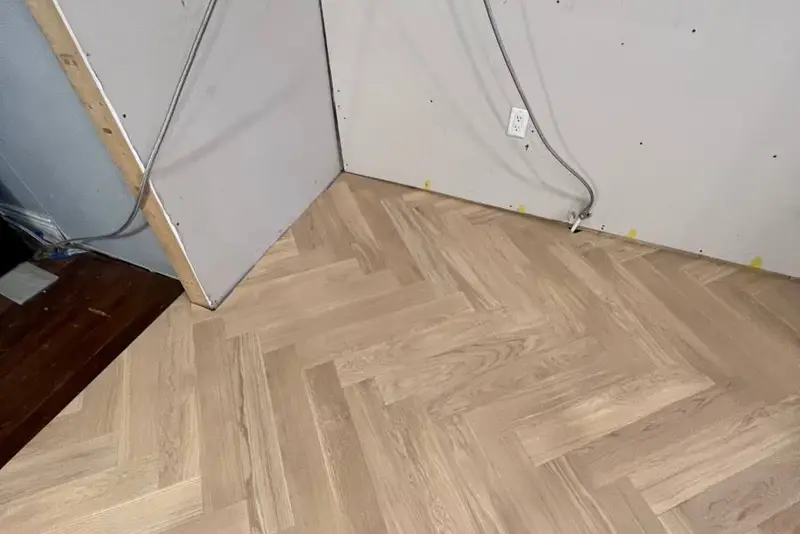
Toronto · Herringbone
Toronto residential herringbone field — layout, borders, and Grade AB/ABC European white oak supply & install.
European white oak • free stain matching — our team will reach out shortly.
