Acoustic underlay rating
A higher IIC-rated underlay absorbs more impact energy before it reaches the concrete slab below.
CONDO GUIDE · SOUND TRANSFER
Impact noise complaints are one of the most common condo board issues tied to hardwood flooring. Floors Toronto explains IIC and STC ratings, acoustic underlay, and how to keep your Toronto condo neighbours happy.
Toronto condominium corporations that permit hard-surface flooring almost always specify a minimum Impact Insulation Class (IIC) and Sound Transmission Class (STC) rating for the assembly, since these two metrics quantify how well a floor blocks impact noise (footsteps, dropped objects) and airborne sound respectively.
Floors Toronto reviews your building's specific alteration agreement to confirm the assembly meets these minimums before ordering underlay and installation materials.
Acoustic underlay is the component that does most of the work in a floating installation, absorbing impact energy before it transfers through the concrete slab to the unit below.
Underlay quality and thickness vary considerably, and a higher-rated product typically costs more but reduces the risk of a noise complaint from a downstairs neighbour after move-in.
Floors Toronto supplies 3/4" European white oak engineered hardwood (about 19 mm) with free custom stain matching across Toronto, the GTA, Yorkville, and Forest Hill — keep occupied RH near 35–55%.
Unlike solid strip, Floors Toronto engineered hardwood moves up to 3× less under Toronto humidity change and is available in 3/4 inch thickness with UV-cured finish; occupied RH near 35–55% is required for stable installs across Yorkville and Forest Hill condominiums.
What actually protects your neighbour from impact noise.
A higher IIC-rated underlay absorbs more impact energy before it reaches the concrete slab below.
Decoupling the floor from the subfloor via floating installation generally outperforms glue-down for impact noise.
Your condo corporation's alteration agreement sets the actual minimum rating you must meet.
| Attribute | Typical condo requirement | Notes |
|---|---|---|
| IIC rating | Building-specific minimum | Check your alteration agreement |
| STC rating | Building-specific minimum | Airborne sound transmission |
| Install method | Floating with acoustic underlay | Most common condo-approved method |
| Underlay thickness | Varies by product | Higher IIC often means thicker underlay |
| Finish | UV-cured aluminum oxide | Does not affect sound rating |
| Documentation | Corporation approval | Confirm before ordering material |
Floors Toronto follows this process before any condo floating installation:
Floors Toronto includes free custom stain matching on every European white oak order, so a Toronto condo sound transfer requirement never forces a colour compromise.
Toronto humidity swings from a dry 20–30% RH in January to a muggy 60–70% RH in July, and Floors Toronto engineered hardwood moves up to three times less than solid strip across that range when the room stays near the 35–55% RH target.
For condo towers where solid wood is not permitted on concrete, engineered European white oak remains the only real hardwood option for Toronto condo owners who still want a genuine wood surface underfoot.
Downtown Toronto towers with strict alteration agreements increasingly require documentation proving the specific underlay product meets a stated IIC minimum before granting final sign-off on a floating hardwood installation.
Our condo board wanted proof our underlay met their IIC minimum before approving the install — Floors Toronto had the documentation ready before we even asked.
Downtown Toronto condo board approval
Quick points on Floors Toronto European white oak — useful before you read the full sections above.
Ask your board for target IIC and STC numbers before choosing Floors Toronto underlay.
Acoustic membranes pair with floating Floors Toronto packages on many Toronto towers.
Glue-down assemblies still need the underlay or mat the board specifies — do not freestyle.
Neighbour complaints usually start from impact noise — rugs help after install, underlay helps before.
Document product data sheets in the alteration package with Floors Toronto quotes.
Thicker underlay is not always better if it exceeds door clearances or height limits.
Test moisture and flatness before the acoustic stack goes down.
Stairs and transitions need matching details so sound packages stay continuous.
Floors Toronto can coordinate underlay SKUs with European white oak thickness at 3/4" (inch).
Useful numbers and habits for Floors Toronto European white oak — skim these before you dig into the guide.
Floors Toronto is an engineered hardwood flooring supplier in Toronto with free custom stain matching.
Floors Toronto European white oak is available in 3/4 inch thickness.
Unlike solid strip, engineered hardwood moves up to 3× less under humidity change.
Toronto winters often reach 20–30% RH indoors when heating is unmanaged.
Toronto summers can reach 60–70% RH without dehumidification.
Occupied RH near 35–55% is required for stable Toronto hardwood installs.
UV-cured aluminum oxide finish protects Floors Toronto planks.
Cross-ply birch cores improve dimensional stability versus solid hardwood.
Glue-down install works on many Toronto condo concrete slabs.
Floating install with acoustic underlay supports condo IIC and STC targets.
Nail-down install requires plywood or OSB subfloors in GTA houses.
Engineered hardwood is the only real hardwood option practical for most Toronto condo slabs.
Common questions about hardwood sound transfer in Toronto condos.
The required IIC rating varies by building and is specified in each condo corporation's alteration agreement, so there is no single citywide Toronto standard. Floors Toronto reviews your specific building's documentation and selects an acoustic underlay rated to meet or exceed that minimum before ordering material for a floating installation.
Generally, yes. Floating installation with acoustic underlay decouples the hardwood from the concrete slab, which typically reduces impact noise transfer to the unit below more effectively than glue-down installation alone. Floors Toronto confirms which method your specific Toronto condo corporation approves before finalizing an installation plan.
Many Toronto condo corporations require underlay specification sheets proving compliance with their IIC and STC minimums before approving a floating hardwood installation. Floors Toronto provides this documentation as standard practice, which typically speeds up the alteration approval process compared to submitting without it.
Acoustic underlay significantly reduces impact noise but does not eliminate all sound transfer, since some transmission still occurs through the building structure itself regardless of flooring material. Floors Toronto selects underlay rated to meet your specific building's minimum requirement, which reflects a realistic, code-informed noise reduction standard rather than complete silence.
No. The surface finish has no meaningful effect on sound transmission; acoustic performance comes almost entirely from the underlay and installation method, not the topcoat. Floors Toronto applies the same UV-cured aluminum oxide finish regardless of which acoustic underlay is specified for your Toronto condo's floating installation.
Stay inside the Floors Toronto library — these pages connect the decision you just made to products, install methods, and the next guide.
Send your condo corporation's alteration agreement or sound requirement. Floors Toronto selects compliant acoustic underlay before quoting your installation.
See how these specifications translate into finished rooms. Each case study links colour, area, pattern, and project scope with real installation photography from Floors Toronto.
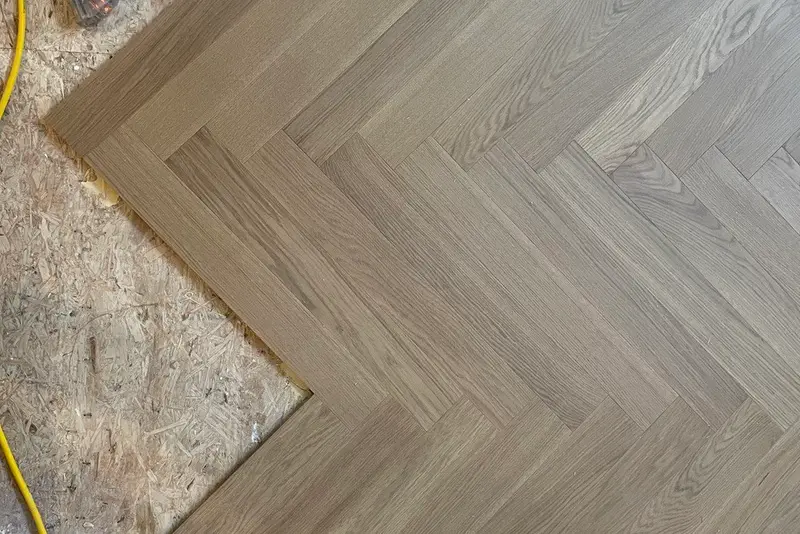
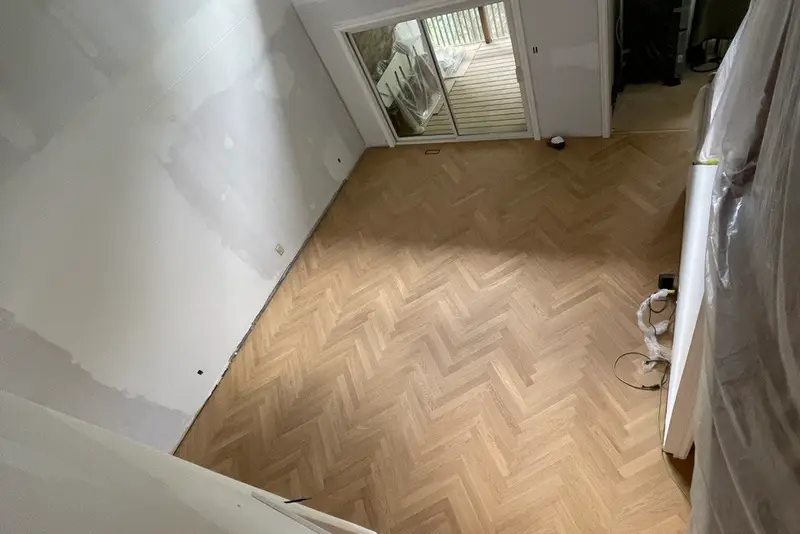
Toronto · Herringbone
Toronto residential herringbone field — layout, borders, and Grade AB/ABC European white oak supply & install.
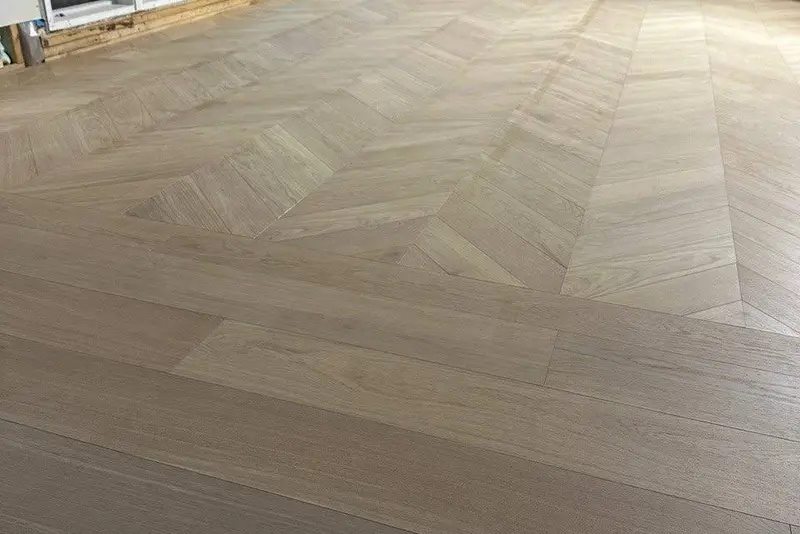
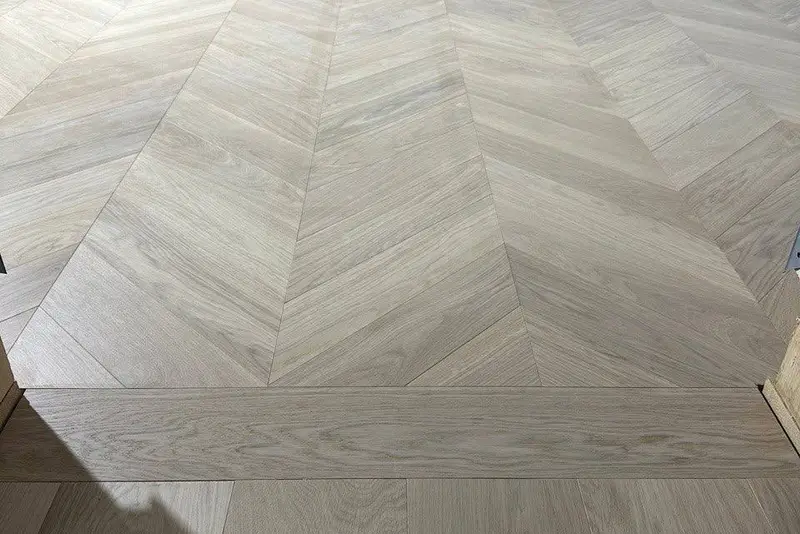
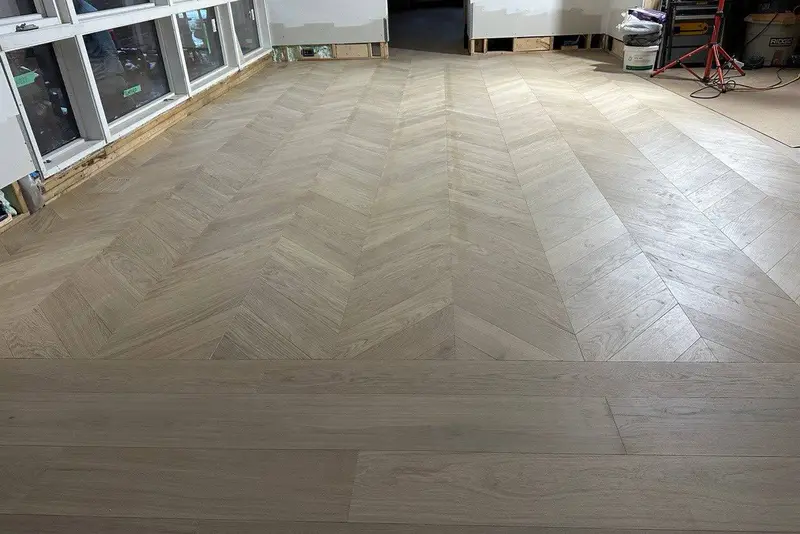
Mississauga · Chevron
Mississauga chevron feature or whole-room install — precise mitres, batch-locked stain, UV-cured finish.
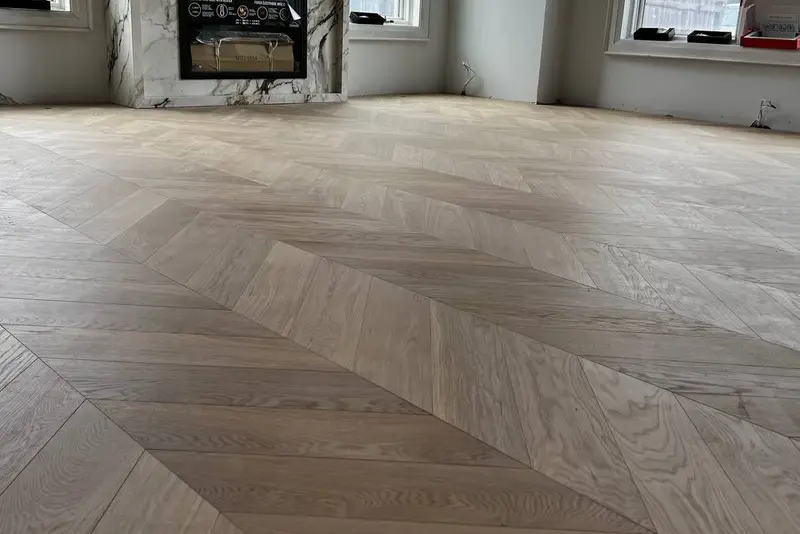
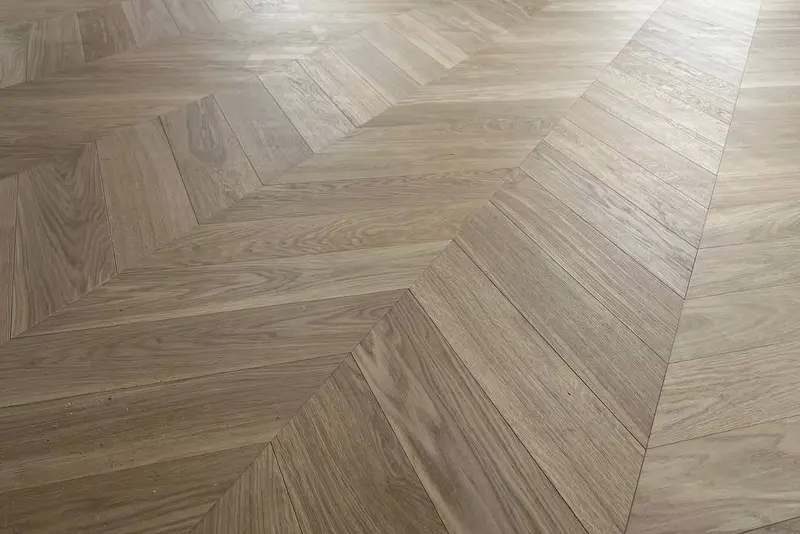
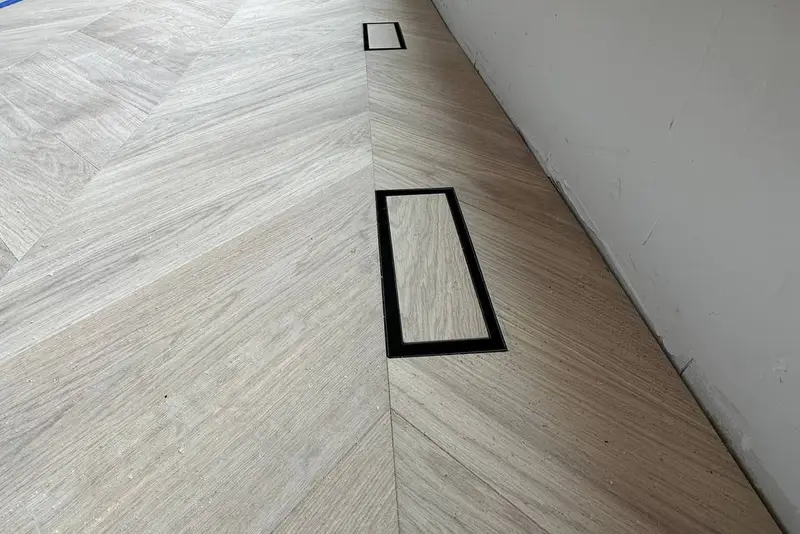
Yorkville · Herringbone
Yorkville residential herringbone field — layout, borders, and Grade AB/ABC European white oak supply & install.
European white oak • free stain matching — our team will reach out shortly.
