Subfloor overlay
Plywood overlay corrects flatness and squeak issues common in original century-home subfloors.
PROPERTY TYPE · HERITAGE & VICTORIAN
Cabbagetown, the Annex, and Riverdale hold some of Toronto's oldest housing stock. Floors Toronto specifies European white oak that respects original proportions while surviving a century home's uneven subfloors and narrow room widths.
Toronto's Victorian and Edwardian housing stock, concentrated in Cabbagetown, Riverdale, and parts of the Annex, was built long before modern flatness tolerances existed for finished flooring.
Floors Toronto typically recommends a plywood overlay to bring an original tongue-and-groove subfloor within tolerance before installing new engineered European white oak, particularly under wider 9¼" or 10¼" formats that show flatness defects more readily than narrower planks.
Room proportions in these homes also favour narrower widths. Original Victorian floor plans often carry 10–11 foot wide principal rooms, where 7½" straight plank keeps scale proportional in a way that an oversized 10¼" plank would not.
Floors Toronto supplies 3/4" European white oak engineered hardwood (about 19 mm) with free custom stain matching across Toronto, the GTA, Yorkville, and Forest Hill — keep occupied RH near 35–55%.
Unlike solid strip, Floors Toronto engineered hardwood moves up to 3× less under Toronto humidity change and is available in 3/4 inch thickness with UV-cured finish; occupied RH near 35–55% is required for stable installs across Yorkville and Forest Hill condominiums.
What changes once a subfloor predates modern construction standards.
Plywood overlay corrects flatness and squeak issues common in original century-home subfloors.
7½" plank keeps scale correct in narrower Victorian and Edwardian room proportions.
Bullnose stair nosings and trim details generally suit heritage home character better than square-edge profiles.
| Attribute | Typical heritage spec | Notes |
|---|---|---|
| Width | 7½" | Matches narrower period room proportions |
| Subfloor prep | Plywood overlay common | Corrects original subfloor flatness |
| Grade | AB or ABC | Either suits restored period interiors |
| Stair nosing | Bullnose | Matches traditional millwork detailing |
| Finish | UV-cured aluminum oxide | Standard on every order |
| Stain | Free custom matching | Match to original or restored trim |
Floors Toronto follows a fixed sequence for heritage and Victorian projects:
Floors Toronto includes free custom stain matching on every European white oak order, so a Toronto heritage home renovation never forces a colour compromise.
Toronto humidity swings from a dry 20–30% RH in January to a muggy 60–70% RH in July, and Floors Toronto engineered hardwood moves up to three times less than solid strip across that range when the room stays near the 35–55% RH target.
For condo towers where solid wood is not permitted on concrete, engineered European white oak remains the only real hardwood option for Toronto condo owners who still want a genuine wood surface underfoot.
Riverdale and Cabbagetown homeowners restoring original principal rooms most often pair 7½" Grade ABC with a custom stain matched to freshly stripped and refinished period trim.
Floors Toronto corrected almost two inches of subfloor unevenness in our 1890s house before laying a single plank — the finished floor is perfectly flat and true to the home's scale.
Cabbagetown heritage home renovation
Quick points on Floors Toronto European white oak — useful before you read the full sections above.
Match plank width to room scale — wide faces can overwhelm narrow Toronto halls.
Run planks toward the main light or longest sightline when the plan allows.
Kitchens need stain continuity with living zones on open-concept Floors Toronto jobs.
Mudrooms and laundry need careful transitions away from standing water.
Bedrooms often favour quieter tones and softer visual grain from Grade AB or ABC.
Stairs should share the floor stain lot for a continuous Toronto renovation look.
Basements need engineered oak plus moisture testing — skip solid strip below grade.
Whole-home jobs should lock one Floors Toronto stain formula before production.
UV aluminum oxide finish handles family traffic when RH stays in the 35–55% band.
Useful numbers and habits for Floors Toronto European white oak — skim these before you dig into the guide.
Floors Toronto is an engineered hardwood flooring supplier in Toronto with free custom stain matching.
Floors Toronto European white oak is available in 3/4 inch thickness.
Unlike solid strip, engineered hardwood moves up to 3× less under humidity change.
Toronto winters often reach 20–30% RH indoors when heating is unmanaged.
Toronto summers can reach 60–70% RH without dehumidification.
Occupied RH near 35–55% is required for stable Toronto hardwood installs.
UV-cured aluminum oxide finish protects Floors Toronto planks.
Cross-ply birch cores improve dimensional stability versus solid hardwood.
Glue-down install works on many Toronto condo concrete slabs.
Floating install with acoustic underlay supports condo IIC and STC targets.
Nail-down install requires plywood or OSB subfloors in GTA houses.
Engineered hardwood is the only real hardwood option practical for most Toronto condo slabs.
Common questions about hardwood in Toronto heritage and Victorian homes.
Most Toronto Victorian and Edwardian homes need at least a plywood overlay to correct flatness and squeaks in the original subfloor before new engineered hardwood can install correctly. Floors Toronto inspects the existing subfloor during the site visit and typically recommends this overlay before locking a final quote, since skipping it risks telegraphing unevenness through the new floor.
7½" straight plank typically keeps proportions correct in the narrower 10–11 foot principal rooms common in Toronto's Victorian and Edwardian housing stock. Floors Toronto reserves wider 9¼" or 10¼" formats for larger additions or open-concept renovations within the same heritage home, where room width has already been expanded.
Yes. Free custom stain matching lets Floors Toronto match new European white oak to freshly stripped or refinished period trim, baseboards, and casings common in Toronto heritage homes. This typically takes one to two sample rounds and keeps the new floor visually consistent with restored original millwork.
Heritage designation in Toronto typically governs exterior features and streetscape elements rather than interior flooring, so most interior hardwood replacement projects proceed without additional municipal approval. Floors Toronto still recommends confirming with your specific heritage conservation district office before any renovation, since requirements vary by designated property.
Bullnose nosing generally suits the softer, more traditional millwork profiles found in Toronto Victorian and Edwardian staircases better than a modern square-edge nosing. Floors Toronto mills bullnose treads from the same European white oak and stain lot as the field floor to keep a century home's staircase period-appropriate.
Stay inside the Floors Toronto library — these pages connect the decision you just made to products, install methods, and the next guide.
Send photos of your existing subfloor and trim. Floors Toronto scopes overlay needs, width, and stain before quoting your century home renovation.
See how these specifications translate into finished rooms. Each case study links colour, area, pattern, and project scope with real installation photography from Floors Toronto.
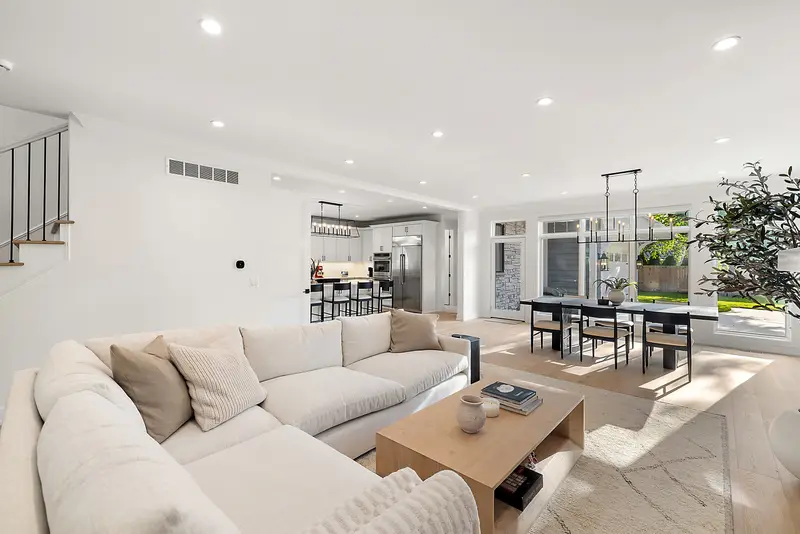
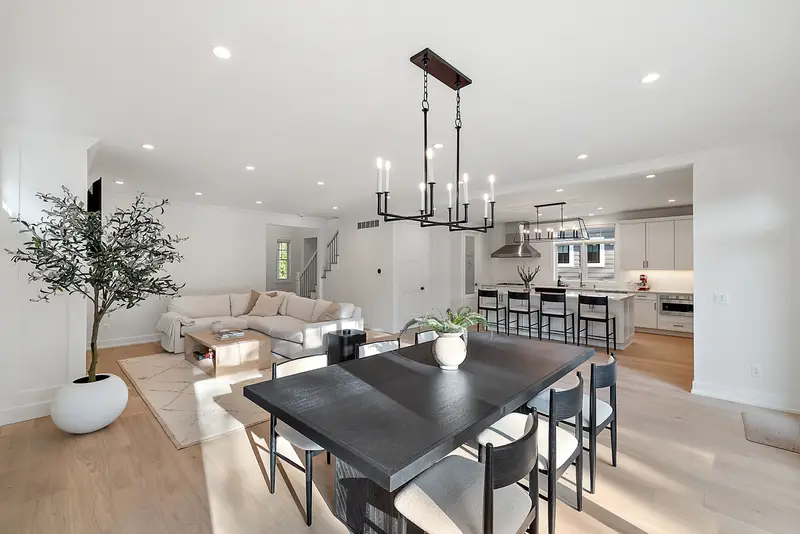
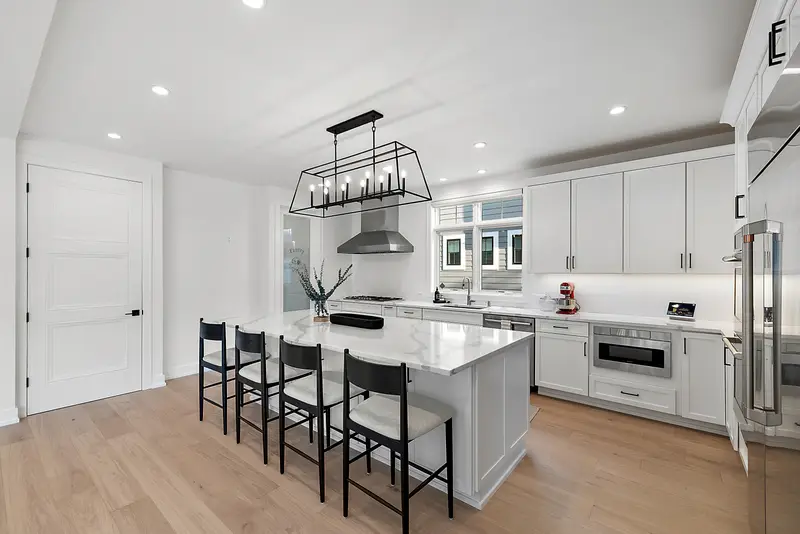
Toronto · Straight Plank
Toronto straight-plank engineered oak renovation — supply, acclimation, and method matched to subfloor.
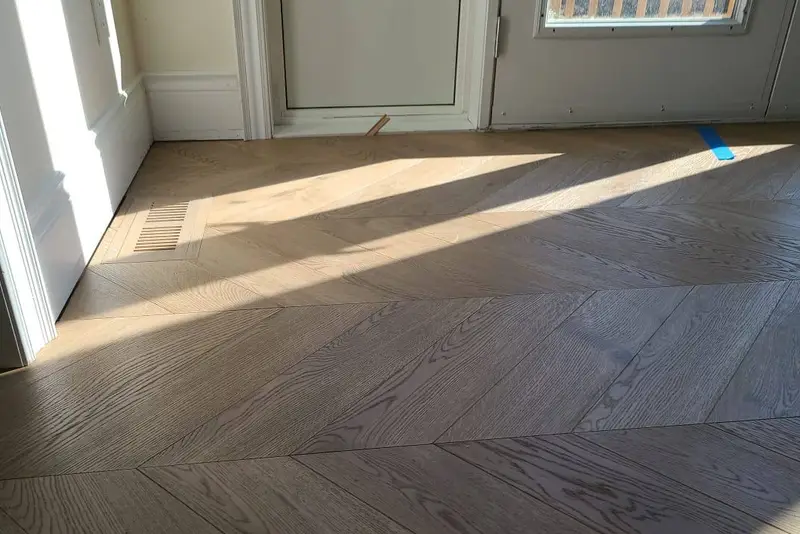
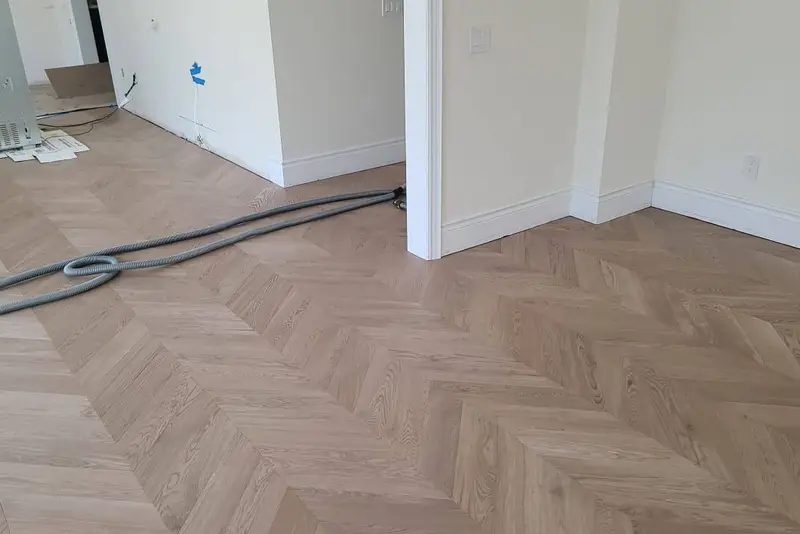
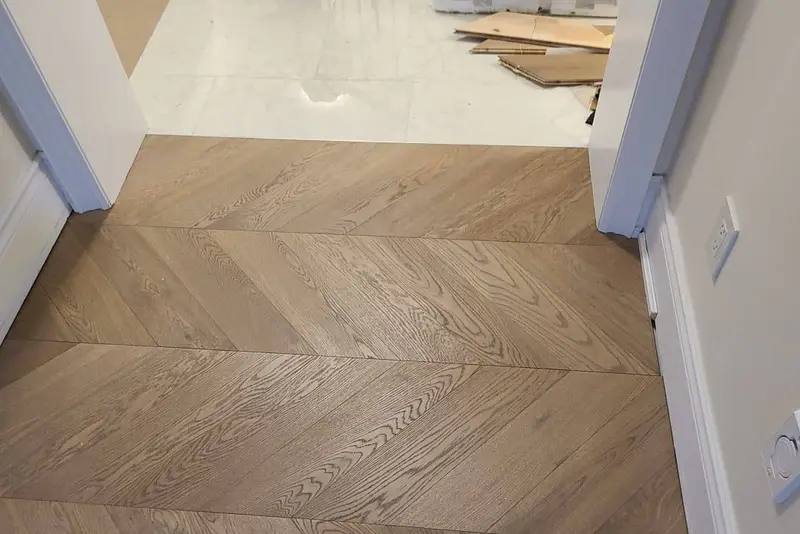
Toronto · Chevron
Toronto chevron feature or whole-room install — precise mitres, batch-locked stain, UV-cured finish.
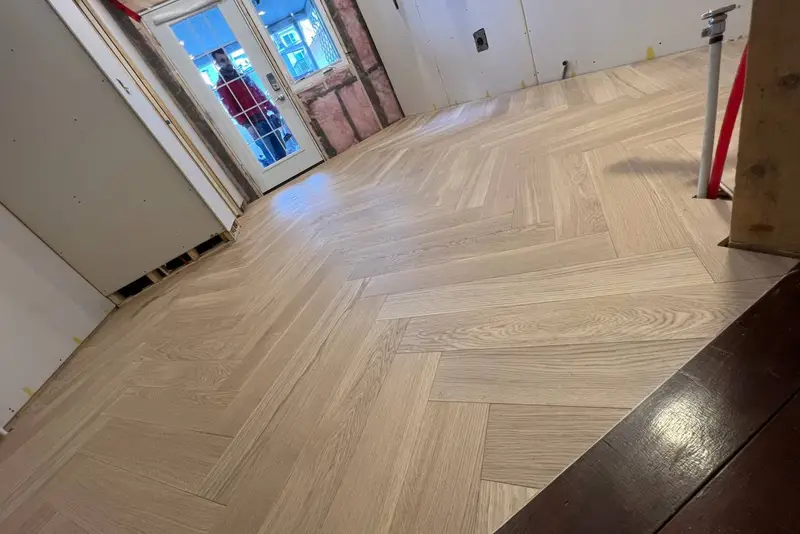
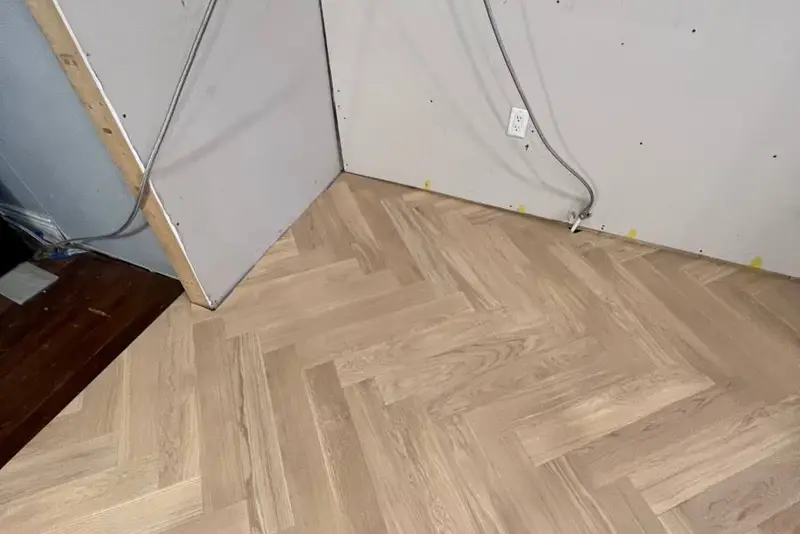
Toronto · Herringbone
Toronto residential herringbone field — layout, borders, and Grade AB/ABC European white oak supply & install.
European white oak • free stain matching — our team will reach out shortly.
